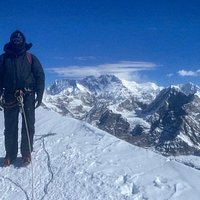
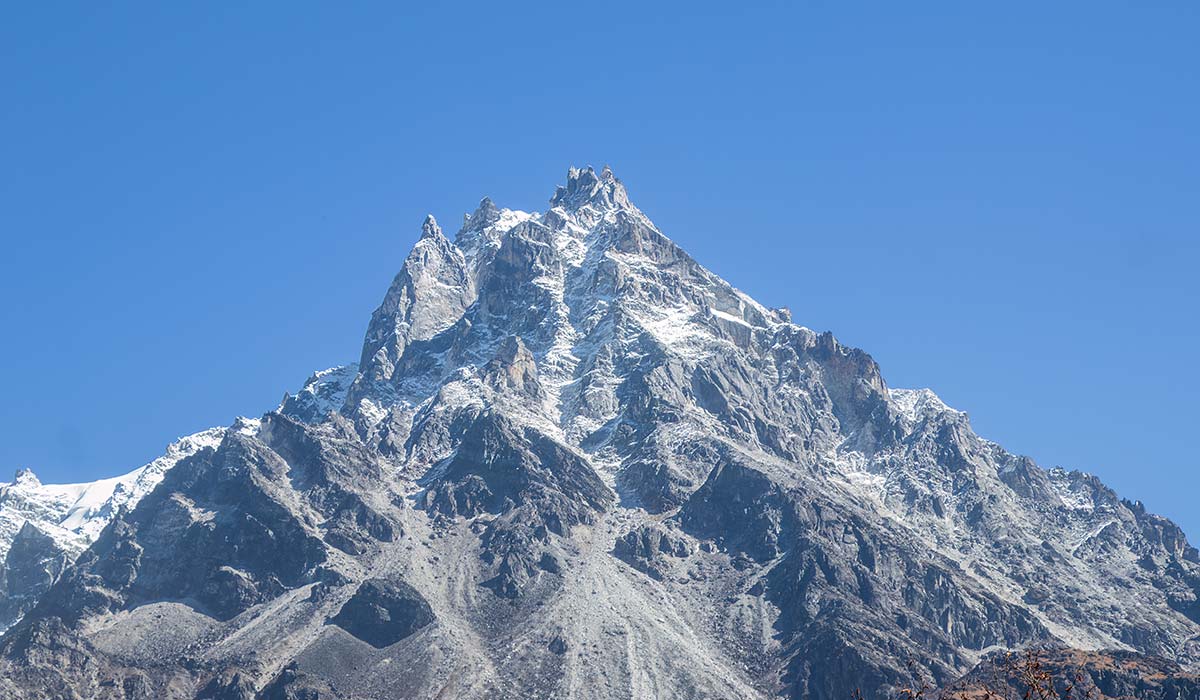
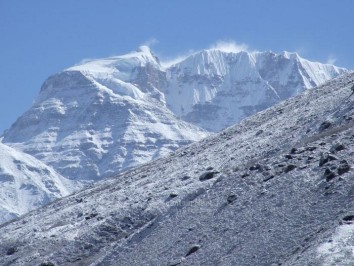
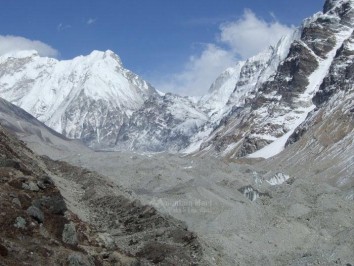
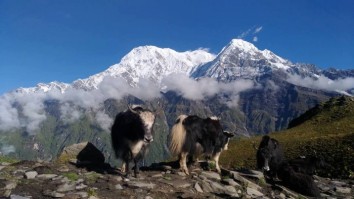
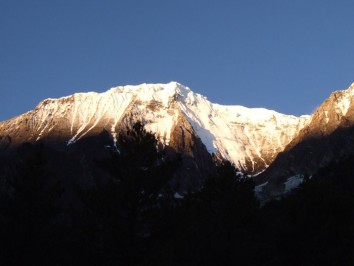
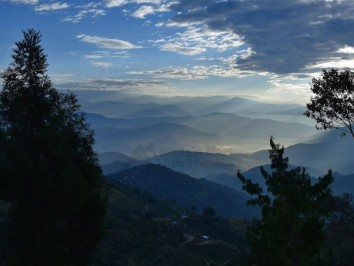
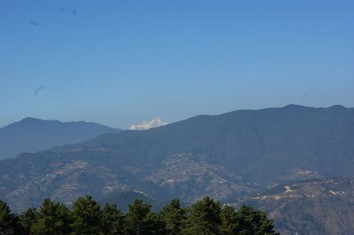
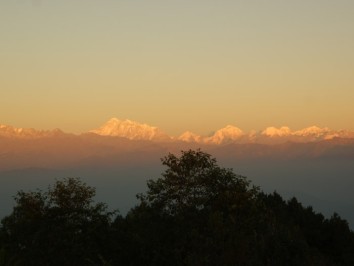
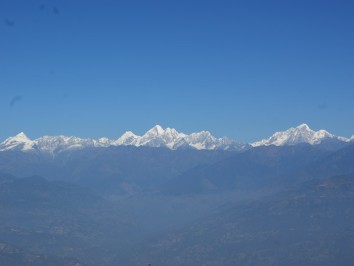
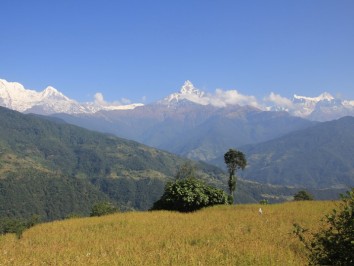
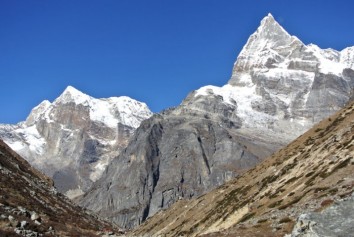
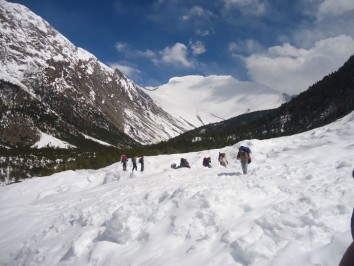
Embark on the ultimate Mera Peak Climbing adventure in Nepal, one of the highest trekking peaks in the Himalayas at 6,461m/21,196ft, offering an unforgettable combination of mountain climbing, cultural immersion, and breathtaking Himalayan views. This 18-day expedition begins with your arrival in Kathmandu (1,300m) and thorough preparation for the climb, followed by a scenic flight to Lukla (2,845m) and gradual trekking through picturesque villages such as Paiya, Panggom, Nigmsa, Chetrakhola, and Kothe, allowing for proper acclimatization and Himalayan exploration. As you ascend via Tangnang and Khare, experience your acclimatization hike to Charpate Himal Glacier, before moving to Mera Base Camp (5,300m) and High Camp (5,700m). The highlight is the summit day, where climbers are rewarded with panoramic views of Everest, Lhotse, Cho Oyu, Makalu, and Kanchenjunga, creating a truly epic Himalayan experience. The descent retraces the scenic trail back to Lukla, concluding with a flight to Kathmandu, combining challenging trekking, high-altitude mountaineering, and awe-inspiring landscapes, making this tour ideal for adventure seekers, mountaineers, and Nepal trekking enthusiasts.
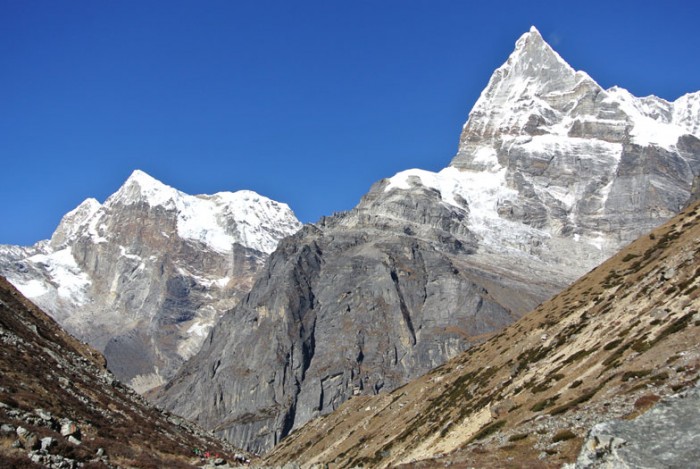
Among numerous permitted trekking peaks, Mera peak is the highest climbing peak in Nepal with the elevation of 6,476m/ 21,247ft. Erected in the east of Mt. Everest in Khumbu region, Mera peak contains three summits: Mera Peak North (6,476m/ 21,247ft), Mera Peak Central and Mera Peak South (6,065m/ 19,898ft). Out of these three summits, Mera Peak North has glaciers in the route and South side is technically demanding; therefore, we prefer Mera Peak Central (6,461m/ 21,190ft) for our expedition. It is one of the scenically elegant peaks of Mahalangur range which offers the stupendous view of sparkling peaks including 5 out of 6 world’s highest peak in Nepal: Mount Everest, Lhotse, Cho-Oyu, Makalu and Kanchenjunga.
Mera Peak expedition commences from Kathmandu to Lukla with 30-40 minutes of scenic turbulent mountain flight. After landing at Lukla, the trails trace the untouched and natural villages of Hinku Valley. There are two different trekking trails from Lukla to the Mera Peak; but we march towards Chuthanga which is less travelled trails of Mera Peak Trail. The 18 days Mera peak expedition follows through rivers and frozen streams; Zatrawala Pass; dense fir, pine and rhododendron forest; terraced green paddy fields; glaciers and traditional villages. At first, the journey descends through the villages: Chhuthang, Zatrawala pass and Thuli Kharka; then inclines uphill tracing Kothe, Thangnak and Khare before landing at Mera Base Camp (5,300m/ 17,388ft). The final expedition from Base Camp to summit is challenging and strenuous due to thin air, steep ridge and cold temperature. The top of the peak is a serene point from where we can perceive scenic landscape and panoramic view of coruscating peaks: Nuptse, Baruntse, Ama Dablam, Kangtega, Mt. Everest, Cho-Oyu and numerous other peaks.
Mera Peak Climbing package is specially tailored by MMT as recommended by the experts. Mountaineering is absolutely challenging than trekking; so, we have added plenty of acclimatization and short day trek to avoid AMS or any hazard. To make the trekking expedition moderate and comfortable, we have hired the experienced guides who support and provide proper guidance needed for mountaineering. We have preferred safer and less-crowded trekking trails; safer and technically easier summit and best season for expedition. Throughout the expedition, we shelter at tea house up-to Khare; but at Base camp and High camp, we take shelter in camp. Mera Peak Climbing is the package for novice mountaineers and experienced trekkers who prefer venturing the summit to keep lifelong memory.
High-Altitude Himalayan Adventure: Conquer Mera Peak (6,461m/21,196ft), one of Nepal’s highest trekking peaks, ideal for mountaineers, adventure enthusiasts, and Himalayan trekkers.
Scenic Lukla Flight: Begin the journey with a stunning flight to Lukla (2,845m), offering panoramic views of the Khumbu and Hinku valleys.
Gradual Trekking for Acclimatization: Trek through picturesque villages such as Paiya, Panggom, Nigmsa, Chetrakhola, and Kothe, ensuring proper acclimatization and enjoying authentic Sherpa culture.
Spectacular Himalayan Views: Witness breathtaking panoramas of Everest, Lhotse, Cho Oyu, Makalu, Kanchenjunga, and Ama Dablam throughout the trek and from the summit.
Acclimatization & Glacier Hikes: Includes acclimatization hike to Charpate Himal Glacier, preparing climbers for high-altitude conditions safely.
Base Camp & High Camp Experience: Stay at Mera Base Camp (5,300m) and High Camp (5,700m), immersing yourself in the rugged Himalayan landscape.
Summit Day Adventure: Achieve the summit of Mera Peak, a challenging yet rewarding climb, then safely descend to Khare, creating a truly unforgettable Himalayan mountaineering experience.
Combination of Trekking and Climbing: This expedition blends moderate trekking, high-altitude mountaineering, and cultural immersion, offering a complete Nepal adventure package.
Professional Guides & Safety Support: Travel with experienced certified mountaineering guides, who provide training, climbing support, and emergency preparedness throughout the trek.
Return via Scenic Route: Descend through Thuli Kharka and Lukla, followed by a flight back to Kathmandu, concluding the expedition with memories of Nepal’s majestic peaks, glaciers, and Himalayan villages.
After your safe landing at TIA, one of the representatives of MMT heartily welcomes you at the Airport Terminal. Transfer to your Hotel and afternoon trip briefing, final trek preparation and scroll around Thamel downtown; travelers hub and colorful market.
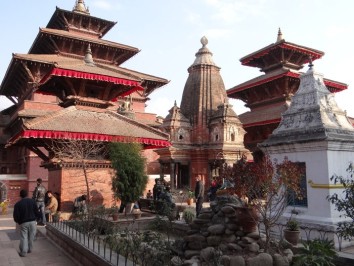
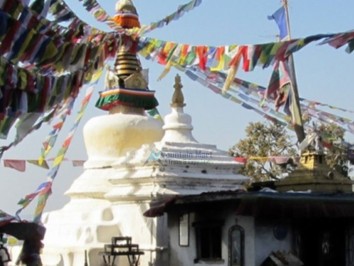
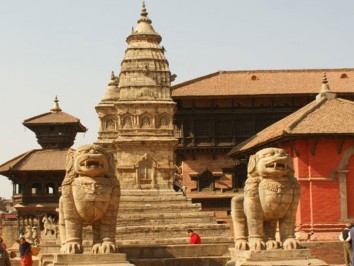
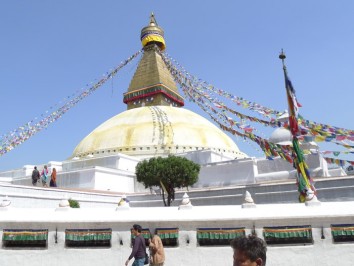
City of Gods and Goddess, Kathmandu, is best known for sacred Hindus and Buddhist Shrines, art, culture and tradition. This day is scheduled to visit the UNESCO listed World Heritage sites including: Swayambhunath, PatanDurbar Square,Bouddhanath,Pashupatinath, along with other historical and holy places. After delightful breakfast in the morning, our city tour guide takes you to Swayambhunath which is at the top of the hillock to the west of Kathmandu. Swayambhunath is one of the oldest temples of Nepal which is popular among foreigners as ‘Monkey Temple’. The spherical dome at the top, Huge Bajra, holy stupas, shrines, Mani wheels and reckless monkeys are the center of the attraction of Swayambhunath visit. The excursion then accelerates towards Patan, the city of festival, feast, art and culture. The city is prominent place to visit due to ancient Patan Durbar square, Krishna Mandir, Ganesh mandir and many more temples and museums. The main highlight of the tour is inspection of art, history, cultural importance and architectural craftsmanship in Patan. Boudhanath is next destination of city tour which lies at northeast of Kathmandu. The stupa here is one of the largest spherical stupas in Nepal and is mostly visited by the Buddhist and Hindus pilgrims throughout the year. The aesthetic monks, prayer hymn, rolling Mani Wheels, and effused incense stick have made the vibrant ambiance in this area. Another most exciting place to visit in Kathmandu is Pashupatinath temple, the oldest temple in Nepal. This temple of lord Shiva is one of the sacred temples of Hindus living in every nook and corner. Non-Hindus are not allowed to enter inside the premises of the temple; however, one can capture the photos of the traditional cremation ceremony and temple from the opposite bank of the holy Bagmati River. This day tour bestows you a souvenir of cultural and architectural prolificacy. After city excursion, the guides then take you back to your own hotel and provide you brief details about the MERA PEAK CLIMBING; and also provide you gears, sleeping bags or Tents. Get refreshed and prepare gears or luggage for the journey on next day.
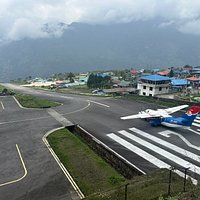
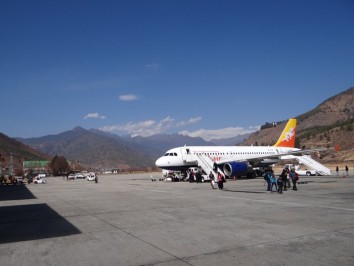
Today, we carry take away breakfast with us and head to Tribhuwan International airport in the early morning for scenic mountain flight from Kathmandu (TIA) to Lukla (Tenzing-Hillary airport); the gateway to the Himalayas. Lukla airport is the highest airport in Nepal and also one of the most dangerous airstrips in the world with just a single runway over a cliff. After 30-40 minutes of turbulent flight, we reach at Lukla and afternoon explore the beautiful chauri kharka village, traditional Sherpa lifestyle and enjoy the modern amenities . After short hike, we acclimatize properly and prepare the luggage, gears for tomorrow’s journey.
On this day, we begin our journey after having delicate breakfast. From Lukla, we head towards east under Kalo Khola Ridge through tiny hamlets, pasture land, and dense forest. The first few hours of the trek is easy and follows straight trail; but later on, we ascend uphill to Chutanga. The journey from Lukla to Chutanga offers majestic scenery, green vegetation, host of rhododendron flowers, numerous streams, and cerulean landscape.
After delicious breakfast, we ascend steep uphill for few hours and cross Kalo Khola Ridge traversing boulder slope before entering into Hinku Valley through Zatrawa La Pass (4,610m/ 15,125 ft). The pass is also marked as the boarder of Sagarmatha and Makalu Barun National Parks. From the top of the pass, we perceive the pristine view of Hinku valley under green hills; turquoise scenery and dazzling peaks: Kongde Ri, Numbur Himal, Lumding Himal, etc. After enjoying the exquisite view, we follow the straight trail for few hours and then drop down to Thuli Kharka for today’s shelter.
Today’s trek is long and inconsistent; so we begin our journey in the morning after light breakfast. From Thuli Kharka, we walk through big boulders and traverse uphill-downhill route perceiving the magnificent view of Mera peak and various snow-clad peaks from the view point below Tashi Dingma. From here, the trail again follows steep decent to Tashing Ongma and then crosses two suspension bridges over Hinku River. Finally, we climb uphill path from Mosom Kharka and reach at today’s destination: Kothe.
After having breakfast, we follow the uphill trail along Hinku River and move towards summer herders’ settlement: Gondishung. While marching further, we come across Lungsumba Gompa which is believed to have been built 200 years ago. The Mani boulder on the way has inscription of Mera Peak route. After short and elegant journey, we ascend higher and reach at Summer Village: Thangnak.
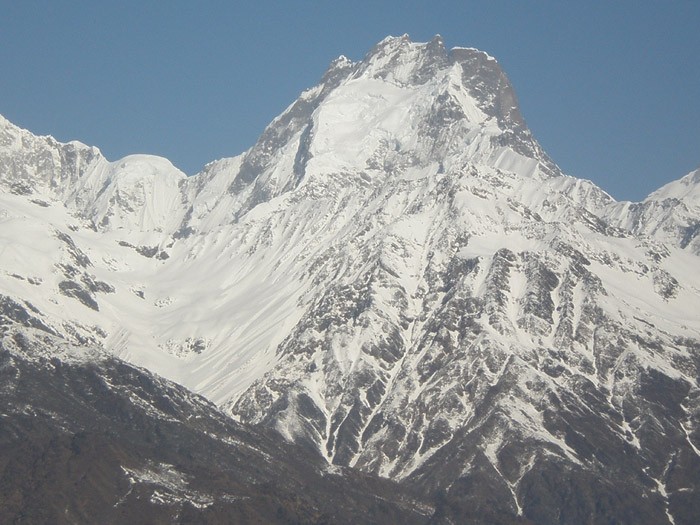
After eating delicate breakfast at Thangnak, the trail traces alongside Sabai Tsho and ascends to Khare through sub tropical dense pine, fir, and rhododendron forest. With the spectacular view of Nuptse Glacier and Nuptse Shar Glacier, we descend down through sandy path and then climb steep up. From Khare, we can view sparkling northern face of Mera Peak too.
Today is marked as the boost-up day and trek preparation day. Mountaineering is an adventurous activity which demands alertness, fitness and technicality. The guides will provide you some guidance about the summit; its difficulty; appropriate way of summiting the peak; how to use gears and some safety measures. We also check the gears like: ice axe, crampons, boots, ropes, harness, ascenders, etc for final preparation. The day is so special day for acclimatization and also for preparation. If any confusion remains or lacks any gears, consult with the expert guides.
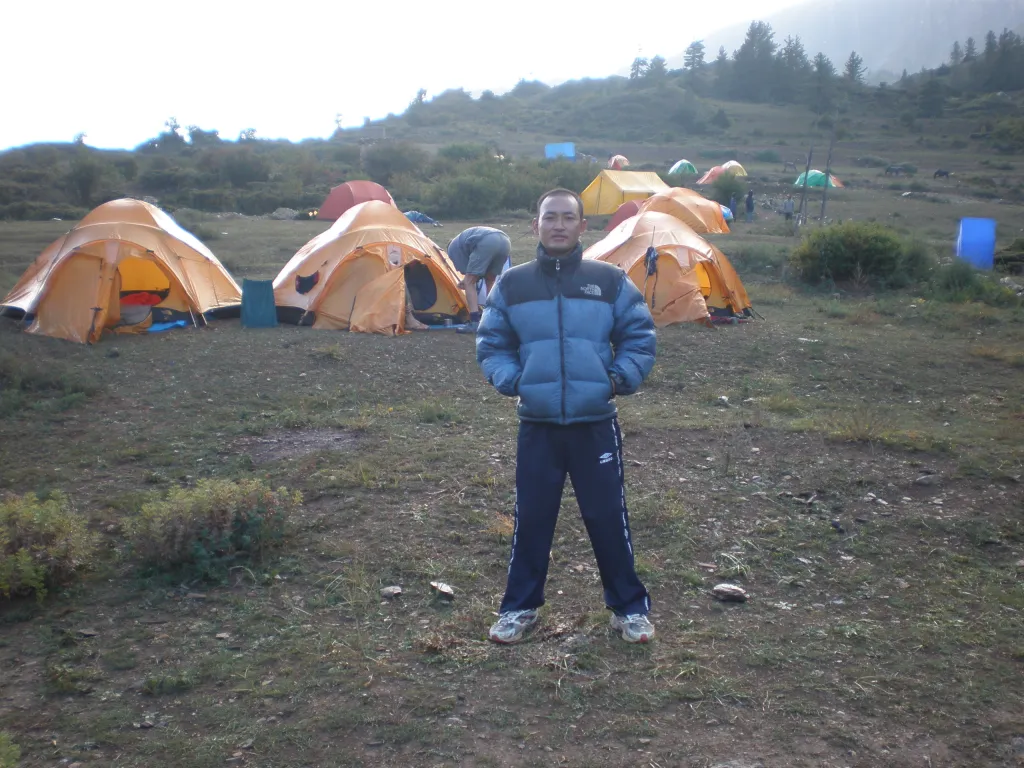
After the previous day’s boost up acclimatization, we start our trek with high confidence as today’s trek is technically strenuous and challenging. From Khare, we ascend steep to Mera glacier; cross Mera La Pass and reach at Mera Base Camp. The scenery and surrounding view from Base Camp elegantly allure us. We can enjoy the exquisite view of glaciers and coruscating peaks. From Base Camp Once we reach at the Base Camp, we set up tent for tonight’s shelter. Our helpers cook delicious and mouthwatering food to serve you at night.
Today, we have to cover one of the most challenging and hazardous trail of the expedition. From Base Camp, we traverse snow covered steep rocky path and few crevasse to reach at the top marked by the cairn. From the High Camp, the Mt. Everest, Makalu, Cho-Oyu, Baruntse, Kanchenjunga, Kusum Kanguru appear stupendous and tantalizing at near distance. After enjoying few moments at High Camp, we set the tent and prepare our gears for tomorrow’s final expedition. The expert guides will also provide motivation and tips before going to sleep.
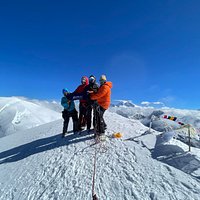
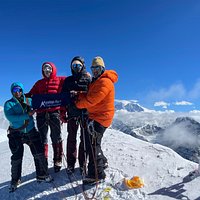
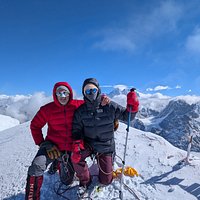
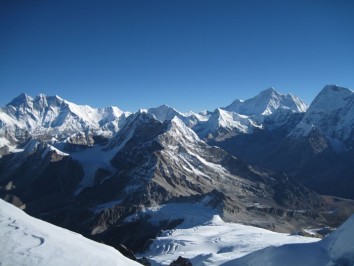
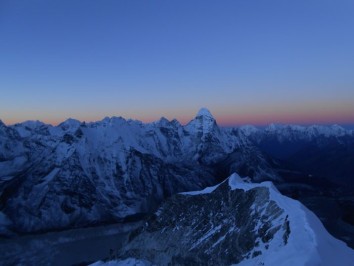
Today is the most important day to mark the victory over Mera Peak. The climate in the afternoon is risky and hazardous due to possibility of snowy storm; therefore, we eat breakfast in the early morning and commence our expedition at around 1 am-2 am. From high Camp, we climb up-to summit with proper gears. Be concentrate and never lose mind or hope while ascending through crevasse. Follow the guidance of the guides and march to the summit. The summit offers the stupendous view of peaks including 5 out of 6 world’s highest peaks: Mt. Everest, Cho-Oyu, Makalu, Lhotse and Kanchenjunga. Once we surmount the summit, we enjoy beautiful moment at the apex and drop back before noon. From here, we drop down to High Camp and then finally to Khare for today’s accommodation and meals.
The expedition trail now descends to lower elevation from Khare. Retracing Thangnak, we drop down to Kothe following the dense fir, juniper, and rhododendron forest. After 5-6 hours of downhill walk, we reach at Kothe for today’s night stay.
After having delicate breakfast, we follow the downhill trail up-to Tashing Ongma crossing suspension bridge over Hinku Khola and its tributaries. From Tashing Ongma, we drop down and then climb steep up to Thuli Kharka passing through rocky boulders on trail. From Thuli Kharka, the view of Mera Peak North, Mera Central and Mera South seems stupendous and superficial.
Today we leave Hinku valley and retrace the trail from Thuli Kharka to Lukla. Ascending from Thuli Kharka, we come across Zatrwa La Pass while tracing to Khumbu valley. From the pass, we can see pristine landscape and tantalizing view of Cho-Oyu, Kongde Ri, Numbur Himal, Lumding Himal, etc. After crossing the Pass, we ascend steep uphill to Chutanga and then walk straight to Lukla through tiny hamlets, pasture land, and dense rhododendron forest under Kalo Khola Ridge. On this day, we celebrate our victory and enjoy the night at Lukla.
The trek concludes after 30-40 minutes scenic flight from Lukla to Kathmandu. Shift your seat to opposing direction than your previous flight for the overall view of daunting landscape. After landing at TIA, you will be transferred to your respective hotel. Shower your soaked body with warm water, arrange your luggage and check your passport, tickets and other important belongings before final departure.
Mountaineering and trekking both are challenging. Beside technical knowledge and physical fitness, we should be favored by climate too for 100% successful expedition. The climate of the Himalayas is unusual and fluctuates any time or any season which may obstruct expedition or cancel the flight; therefore if we add some buffer days in our schedule then no circumstances can postpone or affect our journey. The buffer day is scheduled to avoid any unforeseen circumstances as well as to give some rest to tired limb and muscle after long and challenging expedition. The buffer day is optional for you: If the trek goes as planned then we don’t need this spare day. On this day, take rest at hotel or stroll in the Kathmandu city and purchase some memento to keep some memory of Nepal Visit.
This day is marked as departure day. After breakfast, check out your room at 12pm and transfer to Tribhuwan International airport for departure flight.
The Mera Peak Climbing trip is an 18-day high-altitude expedition in Nepal, combining trekking and mountaineering.
Mera Peak summit reaches 6,461m (21,196ft), making it one of Nepal’s highest trekking peaks.
Mera Peak is considered a challenging trekking peak suitable for fit trekkers and beginner climbers with prior high-altitude experience. Some technical climbing is required using ice axes and crampons.
The best time for Mera Peak is pre-monsoon (March–May) and post-monsoon (September–November), offering clear skies and stable weather.
Physical fitness, endurance training, and prior trekking experience are recommended. Climbers should also practice using mountaineering gear and walking with backpacks at altitude.
Yes, a Mera Peak climbing permit is mandatory, issued by the Nepal Ministry of Tourism. Your trekking agency arranges all permits.
Accommodation is a combination of hotels in Kathmandu, teahouses along the trek, and base/high camp tents on the mountain.
Yes, meals include breakfast, lunch, and dinner in Kathmandu, along the trekking route, and at base/high camps, featuring Nepali and international cuisine.
Yes, Mera Peak reaches high altitudes. The itinerary includes acclimatization days at Tangnang and Khare, and gradual ascent to minimize risk. Hydration, rest, and monitoring symptoms are crucial.
No prior technical climbing experience is required, but basic trekking and good fitness are essential. Guides provide training for ice axe and crampon use.
Essential gear includes trekking boots, down jacket, sleeping bag, crampons, harness, ice axe, gloves, thermal layers, sunglasses, and sunblock.
Yes, experienced mountaineering guides, Sherpa support, and porters are provided to ensure safety, carry heavy gear, and support climbers.
The summit day from High Camp to Mera Peak and back to Khare covers approximately 21 km and 9–10 hours of strenuous climbing.
Yes, beginners with good physical fitness and proper guidance can attempt Mera Peak, but prior trekking or moderate climbing experience is recommended.
Mera Peak is generally safe with proper acclimatization, guides, and equipment. Weather and altitude are the main challenges, which are managed with experienced support.
The expedition starts with a flight from Kathmandu to Lukla (2,845m), followed by trekking through scenic villages toward the Mera Peak Base Camp.
Yes, travel and high-altitude trekking insurance covering medical evacuation, helicopter rescue, and climbing activities is strongly recommended.
From Mera Peak, climbers enjoy panoramic views of Everest, Lhotse, Cho Oyu, Makalu, Kanchenjunga, and other Himalayan giants, making it one of the most spectacular trekking peaks in Nepal.
Yes, the expedition accommodates small groups, couples, and solo travelers, with guides and porters ensuring safety and logistics.
The descent from Khare to Kothe, Thuli Kharka, and finally Lukla is moderate to strenuous, covering 13–17 km per day, but downhill trekking is less technical than the ascent.
Mera Peak (6,461m / 21,196ft) is considered a challenging trekking peak, suitable for fit trekkers and beginner climbers with some high-altitude experience.
The expedition involves:
High-altitude trekking: gradual ascent from Lukla through Tangnang and Khare.
Glacier and ice climbing: from Mera Base Camp to High Camp and summit using crampons and ice axes.
Summit day is long and strenuous (9–10 hours) with steep sections above 5,700m, requiring physical stamina and mental endurance.
Cardio Training: Focus on running, brisk walking, cycling, or stair climbing to build cardiovascular endurance.
Strength Training: Include legs, core, and back exercises (squats, lunges, planks) to handle heavy backpacks and steep ascents.
Trekking Practice: Hike with a loaded backpack (5–10kg) on hills or stairs to simulate trekking conditions.
Altitude Preparation: If possible, do pre-trek hikes at high altitude to reduce risk of altitude sickness.
Flexibility & Balance: Yoga or stretching improves stability on uneven terrain and glaciers.
Mental Preparation: Summit day is long; prepare mentally for challenging weather, cold, and steep climbing sections.
Please, read MMT’s ‘Terms and Conditions’ carefully prior to trip booking
Trekking or Mountaineering in the higher elevation of the Himalayas is one of the most adventurous endeavors which inherit the risk of AMS or injuries or even death. MMT is always concern regarding the comfort, safety and health of trekkers while meandering in higher altitude. We contribute great effort to reduce or control the risk and hazard; but sometime nature’s curse or fluctuate climate in Himalayas is beyond our control and we are not responsible for it.
If you are a keen adventure lover and are ready to follow the hereby mentioned Terms and Conditions then you are heartily welcome at MMT office, Kaldhara-marg, Paknajol, Thamel, Kathmandu, Nepal.
1. All the bookings of the packages are dealt with Mountain Mart Treks and Expedition which is an authorized adventure company based in capital of Nepal: Kathmandu.
2. The term ‘Trip’ formally refers to walking, sightseeing, treks, tours, mountaineering, expeditions or holiday in the mystical land, Nepal.
3. MMT faithfully offers all the amenities in the estimated price of the package.
4. Please go through itinerary page or trek inclusion page for the detail information of the cost transparency. The trek cost may vary from one package to another and some packages don’t include the cost of the following:
5. The travelers must pay 20% upfront out of the total trip cost for the trip conformation.
6. You can pay the booking conformation amount either by credit card and wire transfer, both payment option subject to charge additional bank service fees upto 4% on top of the sum.
7. The trip will be booked once the payment is made by the travelers. We will send you the conformation letter through online and assure to provide all the service detail as mentioned in the itinerary.
8. The final payment must be submitted at the MMT office before the tip departure. Otherwise, you will not be legitimate for trip and no final documentation will be disclosed before the payment.
09. Regarding trip cancellation, we entertain free trip cancellation service upon submission of trustable reason before 90 days of the departure date upon adequate evidence and written reasons.
10. If you cancel the trip 60 days prior to the departure date then 75% cancellation fee will be levied from the booking amount.
11. 85% cancellation fee will be levied if you cancel the trip before 30 days of the trip departure date.
12. The company will be unable to refund the earlier paid (20%) booking payment if you cancel the trek prior to 15 days of the departure date.
13. There will be no payment refund if you voluntarily leave or cancel the trip once it is started; but if you are forced to leave due to unforeseen immediate circumstances then payment can be refunded after proper discretion.
14. We guarantee your safe and successful trip; however, the company reserves the authority to cancel the trip if there will be no minimum number (2) of travelers. In this condition, company will postpone or manage alternative trip.
15. If the company cancels the trip due to any unforeseen circumstances which are beyond our control (i.e. natural disaster, flight cancellation, strikes, wars, riots, quarantine, government intervention policy, weather condition), we will refund after deduction of minimum operating cost involved.
16. If you want to change your booking date, the booking amendment request must be made 90 days prior to the original trip departure.
17. If trekkers demand to change the departure date prior to 60 days of the final departure, US $ 50.00 per person will be charged as cancelation fee. The charge of the trip may also be increased if the market price soars higher during the postponed trip date.
18. The policy of our company is: Trekkers must have insurance policy contract if they want to trek with MMT. The policy must feature: medical coverage, air ambulance, helicopter evacuation facility, as well as flight cancellation insurance if possible.
19. Mountain Mart Treks and Expedition organizes various adventurous trips which have high risk factor and demand more physical stamina plus training. If you can’t accomplish the trek due to your physical inability or sickness, we are not obliged to refund the payment.
20. There may appear hindrance, obstacles or circumstances like: political riot, insurgency, accident, climate change, or natural disasters during the course of trip. Make sure you are ready to deal with all these problems.
21. The trip route, accommodation, modes of transport may be changed without prior notice due to the unforeseen circumstances. It is for your convenience and safety, so hope you will display flexible human nature in this context.
22. While changing the route, transportation, accommodation, or itinerary due to above circumstances, we may charge additional cost or lessen the cost as per the total expenses of the entire trek.
23. MMT holds all the authority to decline, accept, detain or retain any members of the trip if we find anyone suspicious or indiscipline. If you want to trek with MMT, you must accept our leadership during the whole trip.
24. MMT has contracted with network of companies, government of Nepal, individuals to assist the travelers during the trip. These third parties are qualified to perform their duties as contracted. We are not liable in case of loss, damage, irregularities if the third parties don’t perform their duties properly.
25. MMT is not responsible for the violation of any law or rules committed by the travelers in any country.
26. This agreement is governed by the laws of the Government of Nepal. No any individual: employees, representatives, guides of the company can alter the terms and conditions.
27. These terms and conditions may only be waived in special circumstances with written application to the director. Only the director of the company has all the right to amend them.
28. Travelers must be physically and mentally fit for the trekking. It is compulsory to bring health certificates along with proper legal documents for trip approval, if asked.
29. If the flight is cancelled or get delayed due to fluctuate climate or any other causes, MMT is not responsible for the extra expenses or compensation. We can manage alternative arrangement on special request which may demand other extra cost.
30. We have displayed the authentic, genuine and accurate information on our official website and brochure. If any mistake, incomplete or wrong information is seen, please inform us on time.
31. Please read all the above mentioned ‘Terms and Conditions’ before making the bookings. You must abide these conditions if you fancy to trek in the Himalayas with Mountain Mart Treks (MMT)
Foreigners other than Indian citizen, who intend to visit Nepal must hold a valid passport prior to applying for a Nepal visa. The passport must have six months validity from the date of arrival. Foreigners can obtain a Nepalese visa upon arrival at Kathmandu airport, or at a border immigration office. One recent copy of a passport size color photo is required to apply for Tourist Visa to Nepal. Mountain Mart Trek has listed Nepal visa information tips for travelers to Nepal.
A foreigner who has departed before the expiry of the period specified in the visa issued in a visa year shall not be allowed to use the visa by adding the remaining period to another visa year. If any foreigner who has entered Nepal towards the end of a visa year desires to extend his/her stay into the new visa year, he/she may do so by purchasing another visa for the New Year. Provided, however, that the computation of the fees for such period shall be made on the basis of the total period of the stay.
An application for a Tourist Visa must be submitted in the format referred to in Appendix 1.
A Nepali visa issued abroad is valid for entry for three to six months from the date of issue. True -
Citizens of the following countries should be issue visa in their own country to Nepal embassy and consulate.
Afghanistan, Cameroon, Ethiopia, Ghana, Iraq, Liberia, Nigeria, Palestine, Somalia, Zimbabwe.
No foreigners except Indians are entitled to Nepal without a valid visa.
Visas can be obtained from the following immigration offices in Nepal:
A copy of the Visa Form is available for use at the end of this document that avoids you long queue to pick up the Nepal visa form at the international airport.
The fees payable only in USD dollars for obtaining a visa on arrival at any border are as follows:
The fees payable (only in local Nepali currency) to extend the duration of your stay, or to renew a visa are:
A transit visa for one day can be obtained from Nepal's immigration offices at an entry point upon the production of a departure flight ticket via Tribhuvan International Airport in Kathmandu. The fee is US$ 5 or equivalent convertible currency. A transit visa may not be extended.
A Nepali Visa can be obtained from Nepal Embassy / Consulate Offices in your country, or upon arrival at Kathmandu airport. It is also possible to obtain the visa from other border points of entry. You'll need 1 passport photo each time.
For foreign investors, a business visa with a multiple entry facility for a period of one year or five years can be obtained from the Department of Immigration on the recommendation of the Department of Industry and Commerce by paying US$ 100 and US$ 250 or equivalent convertible foreign or Nepali currency.
Note: While we try to make the information contained herein as accurate as possible, we accept no responsibility for any loss, disruption or inconvenience sustained by anyone using this information.
Foreign visitors are requested to keep a note of the dates on their Nepalese visa and their passport number to avoid possible problems. Visa extensions need to be applied for, within the valid period of the Nepalese visa.
You are requested to ensure that you get the arrival/departure stamps on your passport at the entry /exit points to avoid possible legal complications.
Living in Nepal without a passport or a valid visa is a punishable offence.
Deviation from the prescribed trekking routes mentioned on your trekking permit will be treated as a violation of the law.
You are advised to be aware of brokers/cheaters and counterfeit documents or visa/trekking permits to avoid legal complications.
Change of purpose of your stay without permission is not allowed and employment or voluntary services while on a tourist visa is strictly prohibited. It will be a punishable offence.
Be certain to register at the police and Immigration check points along any trail. It would be wise to register your trekking destination and schedule at your Embassy or Consulate.
If you encounter problems along the trails, immediately inform the nearest police or Immigration post officials.
You are requested to change money with recognized dealers and do not forget to take and keep formal receipts.
You are requested to inform the officials at an Immigration Office or Police Station of any changes in the address previously given in your visa application form or disembarkation card, and within seven days.
If, as a tourist, your stay is more than 120 days in one visa year and you wish to visit additional places for longer than 24 hours, you must register at the local police office of such places, your name, passport number and address.
You are advised to be mindful to contact the Department of Immigration to request a visa transfer in the case of getting a new passport or travel document from your embassy, and within seven days.
Passport and trekking permits should be kept by each trekker while trekking.
Filming in restricted or notified areas without permission is strictly prohibited.
Please do not take out the visa stickers from your passport and do not try to change records printed in your passport.
We request your co-operation in observing the following guidelines during your stay in Nepal. Respect local traditions, customs, values and sentiments, help to protect local culture and maintain local pride.
Indian citizens are permitted to travel in Nepal provided they have any one of the following documents:
Passport; Driving license with photograph; Identity card with photograph issued by a governmental body; Ration card with photograph; Voter identity card with photograph; Registration certificate issued by the Indian embassy to Indian citizens residing in Nepal; Ad hoc/temporary identity cards issued by the Indian embassy to the Indian citizen in the event of exigency; Document with photograph and setting out identity, issued by the sub-divisional magistrate or authority there above.
| Department of Immigration Kalikasthan, Dillibazar, Kathmandu. |
|
| Tel : | 977 - 01 - 4433934 / 4429660 / 4438862 / 4438868 |
| Fax : | 977 - 01 - 4433935 |
| Email : | mail@nepalimmigration.gov.np |
| Web : | http://nepalimmigration.gov.np/ |
| Sunday to Thursday | 10:30 a.m. - 17:00 p.m. in Summer |
| 10:30 a.m. - 16:00 p.m. in Winter (Nov. to Jan.) | |
| Friday | 10:30 a.m. -15:00 p.m. |
| Sunday to Thursday | 10:30 a.m. - 15:00 p.m. |
| Friday | 10:30 a.m. - 13:00 p.m. |
Note: All of the information above is based on information from the Department of Immigration of Nepal’s office and may be found on their website.
All trekkers are required to carry a Trekkers' Information Management System card (TIMS card). It is available from the Tourist Services Centre in Kathmandu: Sun – Fri 10:00 – 13:00 and 14:00 – 17:00. It is free, but requires two passport photographs. (Trekking agencies provide the cards for their clients.) Show it at check points on trekking routes.
Trekking Permits are required for all treks that pass through Conservation Areas or National Parks.
Conservation Area permits can be purchased at the Tourist Services Centre for Rs 2000 plus two photographs.
National Park entry tickets cost Rs 3000 and require no photograph. Purchase at the Department of National Parks and Wildlife Conservation office Sun – Fri 09:00 – 14:00 only (next to the Tourist Services office).
Restricted Area Permits are required mainly for camping style trekking in remote areas near the Tibetan border – for which a guide is strongly recommended. They can only be purchased for two or more trekkers. The permits are issued by the Central Immigration Office, require two working days, your original passports (not facsimiles) and two photographs. Costs range from US$10/week to US$500/10 days plus substantial additional amounts for each additional day. These will be procured by your chosen trekking agency. Offices are open daily, but with restricted hours on Saturdays.
The foreign tourist visiting Nepal shall be granted the tourist visa.
The tourist visa shall be granted for a period in maximum of 150 days in a visa year (Visa years means January to December).
A tourist who has departed before the expiry of the period specified in the visa issued in a visa year shall not be allowed to use the visa by adding the remaining period to another visa year.
If any foreigner who has entered into Nepal towards the end of a visa year desires to spend even the period during which he may stay in Nepal with the tourist visa of the other visa year, he may use such facility.
Provided, however, that the computation of the fees for such period shall be made on the basis of the total period of his stay.
Note: Above information is based on Department of Immigration of Nepal office.

Kathmandu: Full meals at hotels including continental and Nepali cuisine.
Trekking & Base/High Camps: Meals include breakfast, lunch, and dinner, featuring:
Breakfast: Eggs, porridge, toast, tea/coffee.
Lunch & Dinner: Dal-bhat (rice, lentils, vegetables), soups, noodles, pasta, and occasional meat options.
Hydration: Drink bottled or filtered water, and hot beverages are available in teahouses and camps.
Energy Snacks: Carry energy bars, nuts, chocolate for trekking and summit day.
Kathmandu: 3-star hotels or boutique lodges with private bathrooms and modern amenities.
Trekking: Teahouses or lodges at Paiya, Panggom, Nigmsa, Chetrakhola, and Kothe provide basic but comfortable rooms with clean bedding.
Base & High Camp: Camping in tents with sleeping bags at Mera Base Camp and High Camp.
Safety & Comfort: All accommodations are chosen for hygiene, proximity to trekking routes, and safety.
Transportation: Flight from Kathmandu to Lukla at the start, and return flight from Lukla to Kathmandu.
Guides & Support: Professional mountaineering guides, Sherpa support, and porters for carrying gear.
Permits & Fees: Mera Peak climbing permit, Sagarmatha National Park permit, and TIMS card included.
Emergency & Safety: Guides provide altitude monitoring, emergency protocols, and communication equipment.
Base Layers: Thermal top and bottom for cold nights and summit day
Mid Layers: Fleece jacket or soft-shell for warmth during trekking
Outer Layer: Waterproof and windproof jacket and pants for snow, rain, and wind
Insulated Jacket: Down or synthetic for summit day (extremely cold temperatures above 5,500m)
Trekking Pants & Shorts: Lightweight, quick-dry, and comfortable for trekking
Gloves: Layered gloves – lightweight for trekking, insulated and waterproof for high-altitude climbing
Hats & Buffs: Warm hat, sun hat, and buff for sun and wind protection
Socks: Thermal socks for high altitudes, trekking socks for lower elevations
Trekking Boots: Sturdy, waterproof boots for trekking days
Mountaineering Boots: Double-layer or insulated boots suitable for crampon use during summit
Camp Shoes / Sandals: Comfortable footwear for lodges or tents
Gaiters: To protect from snow and dust
Crampons: For glacier and ice climbing
Ice Axe: Essential for summit climb
Climbing Harness & Carabiners: Provided by agency or bring personal for safety
Helmet: High-altitude climbing protection
Trekking Poles: Useful for trekking and steep ascents
Headlamp: With spare batteries for early starts and night use
Sunglasses & Goggles: UV protection for snow glare
Backpack: 40–50L for trekking; 20–30L daypack for summit essentials
Sleeping Bag: Rated for -15°C to -20°C for high-altitude camps
Sleeping Bag Liner: Lightweight and hygienic option
Insulating Mat: Optional for comfort in tents
Water Bottles / Hydration System: Minimum 2 liters capacity
Water Purification Tablets / Filter: For safe hydration
Sunscreen & Lip Balm: SPF 50+ recommended
Toiletries: Toothbrush, toothpaste, biodegradable soap, towel, wet wipes
Personal First Aid Kit: Bandages, blister pads, painkillers, altitude sickness medication
Snacks & Energy Bars: Quick energy during trekking and summit
Travel Documents: Passport, permits, insurance, and copies
Camera / Smartphone: Optional, with extra batteries/power bank
Binoculars: For panoramic mountain views
Notebook or Journal: Record your expedition experience
Portable Charger / Solar Panel: For charging devices in remote camps
Hand Warmers & Foot Warmers: Useful during summit night
Layering is key: Temperatures range from 2,700m in Paiya to 6,461m on the summit.
Weight management: Keep your backpack lightweight; use porters for heavy luggage.
Prepare for extreme conditions: Summit day can be cold, windy, and physically demanding.
The Mera Peak expedition gradually ascends from Kathmandu (1,300m) to the summit at 6,461m (21,196ft). Key elevation points include:
Lukla: 2,845m / 9,333ft – Starting point of the trek
Paiya (Chutok): 2,730m / 8,954ft
Panggom: 2,850m / 9,348ft
Nigmsa: 2,745m / 9,003ft
Chetrakhola: 3,150m / 10,332ft
Kothe: 3,691m / 12,109ft
Tangnang: 4,326m / 14,189ft
Khare: 5,045m / 16,551ft
Mera Base Camp: 5,300m / 17,384ft
High Camp: 5,700m / 18,700ft
Summit – Mera Peak: 6,461m / 21,196ft
Gradual ascents allow better acclimatization while minimizing the risk of altitude sickness.
Stepwise Ascent: The itinerary includes shorter trekking days and rest/acclimatization days, particularly at Tangnang (4,326m) and Khare (5,045m).
Acclimatization Hikes: Optional side hikes like Charpate Himal Glacier help the body adapt to higher altitudes.
Climb High, Sleep Low Principle: Gain higher elevations during day hikes but return to lower camp to sleep, enhancing adaptation.
Hydration & Nutrition: Drink at least 3–4 liters of water per day and consume carbohydrate-rich meals.
Monitor Health: Watch for symptoms of headache, nausea, dizziness, or shortness of breath; slow down or rest if needed.
Hire Experienced Guides & Porters: Certified guides ensure safe navigation, proper acclimatization, and emergency response.
Check Weather Conditions: Summit day should only be attempted in stable weather with clear visibility.
Use Proper Equipment: Crampons, ice axes, helmets, harnesses, and insulated clothing are essential for glacier and summit sections.
Altitude Sickness Prevention:
Ascend gradually, do not skip acclimatization days
Avoid alcohol and excessive caffeine
Medications like Acetazolamide (Diamox) can help but consult your doctor
Emergency & Evacuation Plan: Guides carry satellite phones, first aid kits, and oxygen cylinders. Helicopter evacuation is possible from Lukla or high camps if needed.
Physical Fitness: Summit attempts require stamina, leg strength, and cardiovascular fitness; proper training is crucial.
Reservation Confirmation:
To reserve your spot for Mera Peak Climbing, a 30% non-refundable deposit is required at the time of booking.
The reservation is confirmed once the deposit is received and your travel documents are verified.
Full Payment:
The remaining 70% balance must be paid at least 60 days prior to the trip departure.
Late payments may result in loss of reservation or additional fees.
Group Bookings:
For groups of 4 or more, customized itineraries and special discounts are available.
Group bookings require full payment 90 days prior to departure.
Cancellation Policy:
More than 60 days prior: Deposit is non-refundable, but balance is not charged.
30–60 days prior: 50% of total cost is non-refundable.
Less than 30 days or no-show: 100% of total trip cost is non-refundable.
Cancellation due to force majeure (natural disasters, political unrest, flight delays) will be handled on a case-by-case basis.
Trip Postponement / Rescheduling:
Trip dates can be rescheduled subject to guide and permit availability.
Rescheduling requires a minimum 30-day notice before the original departure date.
Accepted Payment Methods: Bank transfer, credit/debit card, PayPal, or in-person payments.
Currency: Payments are accepted in USD, EUR, GBP, or NPR.
Payment Confirmation: Receipts are issued for every transaction, along with official booking confirmation.
Additional Costs:
International/domestic flights, personal gear, travel insurance, and tips are not included unless stated.
Any permit fee changes by the Nepal government will be communicated and adjusted accordingly.
Travel Insurance: Mandatory, covering high-altitude trekking, medical emergencies, and helicopter evacuation.
Medical Fitness: All participants must be physically fit and cleared by a doctor for high-altitude climbing.
Permit & Documentation: Your Mera Peak climbing permit, TIMS card, and Sagarmatha National Park permit are included in the trip package and arranged by the agency.
Mera Peak (6,461m/21,196ft) is one of Nepal’s highest trekking peaks, offering a perfect blend of high-altitude mountaineering, Himalayan trekking, and stunning panoramic views of Everest, Lhotse, Cho Oyu, Makalu, Kanchenjunga, and Ama Dablam. This comprehensive guide covers everything you need to know to plan your Mera Peak expedition in 2026/27, from itinerary, difficulty, and training to logistics, safety, and best seasons.
Pre-Monsoon (Spring): March to May
Clear skies, stable weather, and lush rhododendron forests along the trekking route.
Ideal for climbers aiming for the summit with panoramic Himalayan views.
Post-Monsoon (Autumn): September to November
Crisp air, stable weather, and excellent visibility for photography.
Less crowd compared to Everest Base Camp treks, offering a more serene climbing experience.
Avoid the monsoon season (June–August) due to heavy rain, landslides, and slippery trails. Winter (December–February) is possible but very cold, with increased risk of frostbite.
High-altitude adventure: Trek and climb to 6,461m summit with minimal technical experience required.
Scenic Lukla flight: Stunning aerial views of the Khumbu and Hinku valleys.
Gradual acclimatization: Trek through Paiya, Panggom, Nigmsa, Chetrakhola, Kothe, Tangnang, and Khare with acclimatization hikes.
Base & High Camp experience: Stay at Mera Base Camp (5,300m) and High Camp (5,700m).
Summit day adventure: Achieve the summit and descend safely, covering long but rewarding trekking and climbing distances.
Panoramic Himalayan views: Everest, Lhotse, Cho Oyu, Makalu, Kanchenjunga, and Ama Dablam visible from the summit.
Professional guide support: Experienced mountaineering guides and Sherpa team for safety, gear, and altitude management.
Kathmandu Arrival – 1,300m
Rest and preparation
Fly to Lukla – Trek to Paiya (Chutok) 2,730m
Paiya – Panggom 2,850m
Panggom – Nigmsa 2,745m
Nigmsa – Chetrakhola 3,150m
Chetrakhola – Kothe 3,691m
Kothe – Tangnang 4,326m
Acclimatization hike to Charpate Himal Glacier
Tangnang – Khare 5,045m
Khare – Mera Base Camp 5,300m
Base Camp – High Camp 5,700m
Summit Day – Mera Peak 6,461m and descend to Khare
Khare – Kothe 3,691m
Kothe – Thuli Kharka 4,320m
Thuli Kharka – Lukla 2,845m
Fly back to Kathmandu, free afternoon
Final departure
Difficulty: Moderate to challenging high-altitude trek and mountaineering, suitable for fit trekkers and beginner climbers.
Training: Focus on cardio, leg and core strength, endurance hikes with backpack, and ice climbing practice if possible.
Summit preparation: Mental endurance and gradual acclimatization are crucial.
Meals: Breakfast, lunch, and dinner included; mix of Nepali and international cuisine.
Accommodation: Hotels in Kathmandu, teahouses on trekking route, and tents at Base and High Camps.
Guides & Support: Professional mountaineering guides, Sherpas, and porters for safety and gear.
Transportation: Flight Kathmandu–Lukla–Kathmandu.
Permits: Mera Peak climbing permit, Sagarmatha National Park permit, and TIMS card included.
Clothing: Base layers, fleece, insulated jackets, waterproof shells, gloves, hats, socks
Footwear: Trekking boots, high-altitude mountaineering boots, gaiters, camp shoes
Climbing Gear: Crampons, ice axe, harness, helmet, trekking poles, headlamp
Camping & Personal: Sleeping bag (-15°C to -20°C), hydration system, sunscreen, toiletries, first aid kit, energy snacks
Ascend gradually from 1,300m in Kathmandu to 6,461m at the summit.
Acclimatization hikes and “climb high, sleep low” principle at Tangnang and Khare.
Hydration, nutrition, and altitude monitoring are essential to avoid Acute Mountain Sickness (AMS).
Follow guides’ instructions and acclimatization schedule.
Check weather forecasts before summit day.
Use proper mountaineering equipment.
Carry travel insurance covering high-altitude trekking and helicopter evacuation.
Avoid alcohol and overexertion at high altitudes.
30% deposit to confirm booking; 70% balance 60 days prior.
Accepts bank transfer, credit/debit card, PayPal.
Cancellation charges:
60 days: deposit non-refundable
30–60 days: 50%
<30 days/no-show: 100%
Matt Lovesey
7th Apr, 2022
Mera Peak Climbing
I have just returned from Mera Peak on a trip originally scheduled for April 2020, but rearranged several times due to the pandemic. Firstly I should say that Mountain Mart were very flexible with the rearrangement, allowing us to postpone repeatedly until a time when reduced restrictions allowed the trip to go ahead. Throughout this period they were always very quick to respond to any emails (always well within 24 hours, but usually almost immediate). This was very reassuring during the uncertain times.
From arrival in Kathmandu, Mountain Mart took care of almost everything. We were collected from the airport and taken to a very nice hotel where we had a couple of days to relax and explore Thamel before the trek itself. Internal flights to Lukla and transport to and from the airport were also already arranged and included in the overall cost of the trek.
The trek itself was an incredible experience. Neither my friend or I had ever been to Nepal before, and neither of us had any real experience of that sort of altitude (although both have UK winter climbing experience). Our trekking guide (Lochan), climbing guide (Pemba) and porter (Dawa) very quickly did a very good job of assessing our abilities, and the trek was set to our pace. Within our itinery there was flexibility to allow juggling around rest/acclimatisation days to suit our pace and give us the best chance of making the summit. It was very hard work at times, particularly the long day up to High Camp (we missed out Base Camp) and the summit day itself, but absolutely stunning. We had a perfect summit day with incredible views in all directions, including to Everest.
Our accommodation for most of the trek was a mixture of tea houses and lodges (and one night in a tent at High Camp), and it felt like we were getting the best available. We were very well fed with really good choice at all meal times (including dessert!), and there was no shortage of tea (all covered in the cost of the trek, which kept things hassle free).
Our team of Lochan, Pemba and Dawa were excellent throughout. All were clearly very experienced, very good at judging our needs and assessing our abilities, and really good fun people to share the experience with. It was their expertise that got us to the summit and back safely, and I wouldn't hesitate to team up with them again on the next adventure.
Due to our flight scheduling we had time left at the end of the trek to tag on a few days on the Everest Base Camp route (from Lukla up to Namche Bazar and back). This was all arranged at short notice by Mountain Mart, again with very good accommodation and food, and the good company of Lochan and Dawa.
I fully intend to use Mountain Mart again in the (hopefully not to distant) future - just need to decide what to do next!
James Kean
14th Apr, 2022
Mera Peak Climbing
This was a Romsey Climbers (RoCs) club (UK based climbing and mountaineering club) trip to Nepal in April 2022 to climb Mera Peak. The trip was originally scheduled for April 2020 but due to the COVID pandemic was postponed twice until it eventually took place in April 2022. MMT&E had been recommended by a club member who had used them several times before and sang their praises highly.
Summary: Mountain Mart Treks provided a first-class, very professional and flexible service. I would have absolutely no hesitation using them again (which I hope to do) or recommending them very highly to anyone who would like to trek or climb in Nepal.
I base this assessment on a number of factors (there are more, but these are the main ones), not necessarily in order of importance.
Great communications. Very rapid responses to all enquiries including the need to delay the trip due to COVID restriction. Communications (email) with MMT were always responded to very quickly which was reassuring given the situation and my total ignorance of trekking in Nepal.
An inclusive package that removed all of the risks involved in organising a trek in an unknown country. The package covered all expenses (apart from a couple of meals in Kathmandu), permits and passes. This was a major benefit as all we had to focus on was the trek, the climb and the fantastic scenery. Some other teams we met on the way had to work out the costing for each stay which looked a little messy.
A first-class support team. Trekking Guide (Lochan), Climbing Guide (Pemba) and Porter (Dawa) were incredibly supportive and I would certainly like to use them again for any future trip to Nepal if they were available. On occasions I found the trek physically demanding, and certainly the trek up the glacier and then on summit day were full-on. I never felt pressured to go faster than I could manage (which on some occasions was not that fast!) and felt that my limitations were always taken into account.
Flexibility. During the trek to Mera Peak the itinerary was tuned to match our level of acclimatisation and performance (e.g., an extra day in Khare but then missing out Mera Base Camp and ascending directly to Mera High Camp). When we returned to Lukla we were facing nearly a week in Kathmandu before our flight home (due to cancellations and changes to flight times by our long-haul flight provider, nothing to do with MMT&T). Lochan suggested an excursion to Namche Bazar which we readily took up. This added what was effectively a second mini trek into the schedule and provided a fascinating comparison with the Mera Peak experience. Highly recommended if you have time on your hands!
Perhaps, far more to the point, it was a very enjoyable trip that mixed a lot of hard work and hard breathing with laughter, amazing scenery and wonder at the incredible Nepalese environment, all made possible by Dolakh and the MMT&T team.
Response Time 3 Hours , Response Rate 100%
Enjoy the popular trekking and tour packages in Nepal Himalayas. 2026.

Embark on the ultimate Mera Peak Climbing adventure in Nepal, one of the highest trekking peaks in the Himalayas at 6,461m/21,196ft, offering an unforgettable combination of mountain climbing, cultural immersion, and breathtaking Himalayan views. This 18-day expedition begins with your arrival in Kathmandu (1,300m) and thorough preparation for the climb, followed by a scenic flight to Lukla (2,845m) and gradual trekking through picturesque villages such as Paiya, Panggom, Nigmsa, Chetrakhola, and Kothe, allowing for proper acclimatization and Himalayan exploration. As you ascend via Tangnang and Khare, experience your acclimatization hike to Charpate Himal Glacier, before moving to Mera Base Camp (5,300m) and High Camp (5,700m). The highlight is the summit day, where climbers are rewarded with panoramic views of Everest, Lhotse, Cho Oyu, Makalu, and Kanchenjunga, creating a truly epic Himalayan experience. The descent retraces the scenic trail back to Lukla, concluding with a flight to Kathmandu, combining challenging trekking, high-altitude mountaineering, and awe-inspiring landscapes, making this tour ideal for adventure seekers, mountaineers, and Nepal trekking enthusiasts.
Among numerous permitted trekking peaks, Mera peak is the highest climbing peak in Nepal with the elevation of 6,476m/ 21,247ft. Erected in the east of Mt. Everest in Khumbu region, Mera peak contains three summits: Mera Peak North (6,476m/ 21,247ft), Mera Peak Central and Mera Peak South (6,065m/ 19,898ft). Out of these three summits, Mera Peak North has glaciers in the route and South side is technically demanding; therefore, we prefer Mera Peak Central (6,461m/ 21,190ft) for our expedition. It is one of the scenically elegant peaks of Mahalangur range which offers the stupendous view of sparkling peaks including 5 out of 6 world’s highest peak in Nepal: Mount Everest, Lhotse, Cho-Oyu, Makalu and Kanchenjunga.
Mera Peak expedition commences from Kathmandu to Lukla with 30-40 minutes of scenic turbulent mountain flight. After landing at Lukla, the trails trace the untouched and natural villages of Hinku Valley. There are two different trekking trails from Lukla to the Mera Peak; but we march towards Chuthanga which is less travelled trails of Mera Peak Trail. The 18 days Mera peak expedition follows through rivers and frozen streams; Zatrawala Pass; dense fir, pine and rhododendron forest; terraced green paddy fields; glaciers and traditional villages. At first, the journey descends through the villages: Chhuthang, Zatrawala pass and Thuli Kharka; then inclines uphill tracing Kothe, Thangnak and Khare before landing at Mera Base Camp (5,300m/ 17,388ft). The final expedition from Base Camp to summit is challenging and strenuous due to thin air, steep ridge and cold temperature. The top of the peak is a serene point from where we can perceive scenic landscape and panoramic view of coruscating peaks: Nuptse, Baruntse, Ama Dablam, Kangtega, Mt. Everest, Cho-Oyu and numerous other peaks.
Mera Peak Climbing package is specially tailored by MMT as recommended by the experts. Mountaineering is absolutely challenging than trekking; so, we have added plenty of acclimatization and short day trek to avoid AMS or any hazard. To make the trekking expedition moderate and comfortable, we have hired the experienced guides who support and provide proper guidance needed for mountaineering. We have preferred safer and less-crowded trekking trails; safer and technically easier summit and best season for expedition. Throughout the expedition, we shelter at tea house up-to Khare; but at Base camp and High camp, we take shelter in camp. Mera Peak Climbing is the package for novice mountaineers and experienced trekkers who prefer venturing the summit to keep lifelong memory.
High-Altitude Himalayan Adventure: Conquer Mera Peak (6,461m/21,196ft), one of Nepal’s highest trekking peaks, ideal for mountaineers, adventure enthusiasts, and Himalayan trekkers.
Scenic Lukla Flight: Begin the journey with a stunning flight to Lukla (2,845m), offering panoramic views of the Khumbu and Hinku valleys.
Gradual Trekking for Acclimatization: Trek through picturesque villages such as Paiya, Panggom, Nigmsa, Chetrakhola, and Kothe, ensuring proper acclimatization and enjoying authentic Sherpa culture.
Spectacular Himalayan Views: Witness breathtaking panoramas of Everest, Lhotse, Cho Oyu, Makalu, Kanchenjunga, and Ama Dablam throughout the trek and from the summit.
Acclimatization & Glacier Hikes: Includes acclimatization hike to Charpate Himal Glacier, preparing climbers for high-altitude conditions safely.
Base Camp & High Camp Experience: Stay at Mera Base Camp (5,300m) and High Camp (5,700m), immersing yourself in the rugged Himalayan landscape.
Summit Day Adventure: Achieve the summit of Mera Peak, a challenging yet rewarding climb, then safely descend to Khare, creating a truly unforgettable Himalayan mountaineering experience.
Combination of Trekking and Climbing: This expedition blends moderate trekking, high-altitude mountaineering, and cultural immersion, offering a complete Nepal adventure package.
Professional Guides & Safety Support: Travel with experienced certified mountaineering guides, who provide training, climbing support, and emergency preparedness throughout the trek.
Return via Scenic Route: Descend through Thuli Kharka and Lukla, followed by a flight back to Kathmandu, concluding the expedition with memories of Nepal’s majestic peaks, glaciers, and Himalayan villages.
| Day 1 | Arrival At TIA Kathmandu |
| Day 2 | City Excursion and Trek briefing |
| Day 3 | Day 03: Kathmandu (1,300m/4,265ft) to Lukla (2,845m/9,333ft) (Rest day) |
| Day 4 | Lukla (2,845m/9,333ft) to Chutanga (3,430m/ 11,250 ft) |
| Day 5 | Chutanga (3,430m/ 11,250 ft) to Thuli Kharka (4,320m/ 14, 173ft) |
| Day 6 | Day 06: Thuli Kharka (4,320m/ 14, 173 ft) to Kothe (3,691m/ 12,109ft) |
| Day 7 | Kothe (3,691m/ 12,109ft) to Thangnak (4,326m/ 14,189ft) |
| Day 8 | Thangnak (4,326m/ 14,189ft) to Khare (5,045m/ 16,551ft) |
| Day 9 | Acclimatization and Preparation at Khare |
| Day 10 | Khare (5,045m/ 16,551ft) to Mera Base Camp (5,300m/ 17,384ft) |
| Day 11 | Mera Base Camp (5,300m/ 17,384ft) to Mera High Camp (5,700m/ 18,696ft) |
| Day 12 | High Camp (5,700m/ 18,696ft) to Mera Peak Summit (6,461m/ 21,907ft) – drop back to Khare (5,045m/ 16,551ft) |
| Day 13 | Khare (5,045m/ 16,551ft) to Kothe (3,691m/ 12,109ft) |
| Day 14 | Kothe (3,691m/ 12,109ft) to Thuli Kharka (4,320m/ 14, 173 ft) |
| Day 15 | Thuli Kharka (4,320m/ 14, 173 ft) to Lukla (2,845m/9,333ft) |
| Day 16 | Lukla(2,845m/9,333ft) to Kathmandu(1,300m/4,265ft) flight |
| Day 17 | Buffer day |
| Day 18 | Departure |
After your safe landing at TIA, one of the representatives of MMT heartily welcomes you at the Airport Terminal. Transfer to your Hotel and afternoon trip briefing, final trek preparation and scroll around Thamel downtown; travelers hub and colorful market.
City of Gods and Goddess, Kathmandu, is best known for sacred Hindus and Buddhist Shrines, art, culture and tradition. This day is scheduled to visit the UNESCO listed World Heritage sites including: Swayambhunath, PatanDurbar Square,Bouddhanath,Pashupatinath, along with other historical and holy places. After delightful breakfast in the morning, our city tour guide takes you to Swayambhunath which is at the top of the hillock to the west of Kathmandu. Swayambhunath is one of the oldest temples of Nepal which is popular among foreigners as ‘Monkey Temple’. The spherical dome at the top, Huge Bajra, holy stupas, shrines, Mani wheels and reckless monkeys are the center of the attraction of Swayambhunath visit. The excursion then accelerates towards Patan, the city of festival, feast, art and culture. The city is prominent place to visit due to ancient Patan Durbar square, Krishna Mandir, Ganesh mandir and many more temples and museums. The main highlight of the tour is inspection of art, history, cultural importance and architectural craftsmanship in Patan. Boudhanath is next destination of city tour which lies at northeast of Kathmandu. The stupa here is one of the largest spherical stupas in Nepal and is mostly visited by the Buddhist and Hindus pilgrims throughout the year. The aesthetic monks, prayer hymn, rolling Mani Wheels, and effused incense stick have made the vibrant ambiance in this area. Another most exciting place to visit in Kathmandu is Pashupatinath temple, the oldest temple in Nepal. This temple of lord Shiva is one of the sacred temples of Hindus living in every nook and corner. Non-Hindus are not allowed to enter inside the premises of the temple; however, one can capture the photos of the traditional cremation ceremony and temple from the opposite bank of the holy Bagmati River. This day tour bestows you a souvenir of cultural and architectural prolificacy. After city excursion, the guides then take you back to your own hotel and provide you brief details about the MERA PEAK CLIMBING; and also provide you gears, sleeping bags or Tents. Get refreshed and prepare gears or luggage for the journey on next day.
Today, we carry take away breakfast with us and head to Tribhuwan International airport in the early morning for scenic mountain flight from Kathmandu (TIA) to Lukla (Tenzing-Hillary airport); the gateway to the Himalayas. Lukla airport is the highest airport in Nepal and also one of the most dangerous airstrips in the world with just a single runway over a cliff. After 30-40 minutes of turbulent flight, we reach at Lukla and afternoon explore the beautiful chauri kharka village, traditional Sherpa lifestyle and enjoy the modern amenities . After short hike, we acclimatize properly and prepare the luggage, gears for tomorrow’s journey.
On this day, we begin our journey after having delicate breakfast. From Lukla, we head towards east under Kalo Khola Ridge through tiny hamlets, pasture land, and dense forest. The first few hours of the trek is easy and follows straight trail; but later on, we ascend uphill to Chutanga. The journey from Lukla to Chutanga offers majestic scenery, green vegetation, host of rhododendron flowers, numerous streams, and cerulean landscape.
After delicious breakfast, we ascend steep uphill for few hours and cross Kalo Khola Ridge traversing boulder slope before entering into Hinku Valley through Zatrawa La Pass (4,610m/ 15,125 ft). The pass is also marked as the boarder of Sagarmatha and Makalu Barun National Parks. From the top of the pass, we perceive the pristine view of Hinku valley under green hills; turquoise scenery and dazzling peaks: Kongde Ri, Numbur Himal, Lumding Himal, etc. After enjoying the exquisite view, we follow the straight trail for few hours and then drop down to Thuli Kharka for today’s shelter.
Today’s trek is long and inconsistent; so we begin our journey in the morning after light breakfast. From Thuli Kharka, we walk through big boulders and traverse uphill-downhill route perceiving the magnificent view of Mera peak and various snow-clad peaks from the view point below Tashi Dingma. From here, the trail again follows steep decent to Tashing Ongma and then crosses two suspension bridges over Hinku River. Finally, we climb uphill path from Mosom Kharka and reach at today’s destination: Kothe.
After having breakfast, we follow the uphill trail along Hinku River and move towards summer herders’ settlement: Gondishung. While marching further, we come across Lungsumba Gompa which is believed to have been built 200 years ago. The Mani boulder on the way has inscription of Mera Peak route. After short and elegant journey, we ascend higher and reach at Summer Village: Thangnak.
After eating delicate breakfast at Thangnak, the trail traces alongside Sabai Tsho and ascends to Khare through sub tropical dense pine, fir, and rhododendron forest. With the spectacular view of Nuptse Glacier and Nuptse Shar Glacier, we descend down through sandy path and then climb steep up. From Khare, we can view sparkling northern face of Mera Peak too.
Today is marked as the boost-up day and trek preparation day. Mountaineering is an adventurous activity which demands alertness, fitness and technicality. The guides will provide you some guidance about the summit; its difficulty; appropriate way of summiting the peak; how to use gears and some safety measures. We also check the gears like: ice axe, crampons, boots, ropes, harness, ascenders, etc for final preparation. The day is so special day for acclimatization and also for preparation. If any confusion remains or lacks any gears, consult with the expert guides.
After the previous day’s boost up acclimatization, we start our trek with high confidence as today’s trek is technically strenuous and challenging. From Khare, we ascend steep to Mera glacier; cross Mera La Pass and reach at Mera Base Camp. The scenery and surrounding view from Base Camp elegantly allure us. We can enjoy the exquisite view of glaciers and coruscating peaks. From Base Camp Once we reach at the Base Camp, we set up tent for tonight’s shelter. Our helpers cook delicious and mouthwatering food to serve you at night.
Today, we have to cover one of the most challenging and hazardous trail of the expedition. From Base Camp, we traverse snow covered steep rocky path and few crevasse to reach at the top marked by the cairn. From the High Camp, the Mt. Everest, Makalu, Cho-Oyu, Baruntse, Kanchenjunga, Kusum Kanguru appear stupendous and tantalizing at near distance. After enjoying few moments at High Camp, we set the tent and prepare our gears for tomorrow’s final expedition. The expert guides will also provide motivation and tips before going to sleep.
Today is the most important day to mark the victory over Mera Peak. The climate in the afternoon is risky and hazardous due to possibility of snowy storm; therefore, we eat breakfast in the early morning and commence our expedition at around 1 am-2 am. From high Camp, we climb up-to summit with proper gears. Be concentrate and never lose mind or hope while ascending through crevasse. Follow the guidance of the guides and march to the summit. The summit offers the stupendous view of peaks including 5 out of 6 world’s highest peaks: Mt. Everest, Cho-Oyu, Makalu, Lhotse and Kanchenjunga. Once we surmount the summit, we enjoy beautiful moment at the apex and drop back before noon. From here, we drop down to High Camp and then finally to Khare for today’s accommodation and meals.
The expedition trail now descends to lower elevation from Khare. Retracing Thangnak, we drop down to Kothe following the dense fir, juniper, and rhododendron forest. After 5-6 hours of downhill walk, we reach at Kothe for today’s night stay.
After having delicate breakfast, we follow the downhill trail up-to Tashing Ongma crossing suspension bridge over Hinku Khola and its tributaries. From Tashing Ongma, we drop down and then climb steep up to Thuli Kharka passing through rocky boulders on trail. From Thuli Kharka, the view of Mera Peak North, Mera Central and Mera South seems stupendous and superficial.
Today we leave Hinku valley and retrace the trail from Thuli Kharka to Lukla. Ascending from Thuli Kharka, we come across Zatrwa La Pass while tracing to Khumbu valley. From the pass, we can see pristine landscape and tantalizing view of Cho-Oyu, Kongde Ri, Numbur Himal, Lumding Himal, etc. After crossing the Pass, we ascend steep uphill to Chutanga and then walk straight to Lukla through tiny hamlets, pasture land, and dense rhododendron forest under Kalo Khola Ridge. On this day, we celebrate our victory and enjoy the night at Lukla.
The trek concludes after 30-40 minutes scenic flight from Lukla to Kathmandu. Shift your seat to opposing direction than your previous flight for the overall view of daunting landscape. After landing at TIA, you will be transferred to your respective hotel. Shower your soaked body with warm water, arrange your luggage and check your passport, tickets and other important belongings before final departure.
Mountaineering and trekking both are challenging. Beside technical knowledge and physical fitness, we should be favored by climate too for 100% successful expedition. The climate of the Himalayas is unusual and fluctuates any time or any season which may obstruct expedition or cancel the flight; therefore if we add some buffer days in our schedule then no circumstances can postpone or affect our journey. The buffer day is scheduled to avoid any unforeseen circumstances as well as to give some rest to tired limb and muscle after long and challenging expedition. The buffer day is optional for you: If the trek goes as planned then we don’t need this spare day. On this day, take rest at hotel or stroll in the Kathmandu city and purchase some memento to keep some memory of Nepal Visit.
This day is marked as departure day. After breakfast, check out your room at 12pm and transfer to Tribhuwan International airport for departure flight.
The Mera Peak Climbing trip is an 18-day high-altitude expedition in Nepal, combining trekking and mountaineering.
Mera Peak summit reaches 6,461m (21,196ft), making it one of Nepal’s highest trekking peaks.
Mera Peak is considered a challenging trekking peak suitable for fit trekkers and beginner climbers with prior high-altitude experience. Some technical climbing is required using ice axes and crampons.
The best time for Mera Peak is pre-monsoon (March–May) and post-monsoon (September–November), offering clear skies and stable weather.
Physical fitness, endurance training, and prior trekking experience are recommended. Climbers should also practice using mountaineering gear and walking with backpacks at altitude.
Yes, a Mera Peak climbing permit is mandatory, issued by the Nepal Ministry of Tourism. Your trekking agency arranges all permits.
Accommodation is a combination of hotels in Kathmandu, teahouses along the trek, and base/high camp tents on the mountain.
Yes, meals include breakfast, lunch, and dinner in Kathmandu, along the trekking route, and at base/high camps, featuring Nepali and international cuisine.
Yes, Mera Peak reaches high altitudes. The itinerary includes acclimatization days at Tangnang and Khare, and gradual ascent to minimize risk. Hydration, rest, and monitoring symptoms are crucial.
No prior technical climbing experience is required, but basic trekking and good fitness are essential. Guides provide training for ice axe and crampon use.
Essential gear includes trekking boots, down jacket, sleeping bag, crampons, harness, ice axe, gloves, thermal layers, sunglasses, and sunblock.
Yes, experienced mountaineering guides, Sherpa support, and porters are provided to ensure safety, carry heavy gear, and support climbers.
The summit day from High Camp to Mera Peak and back to Khare covers approximately 21 km and 9–10 hours of strenuous climbing.
Yes, beginners with good physical fitness and proper guidance can attempt Mera Peak, but prior trekking or moderate climbing experience is recommended.
Mera Peak is generally safe with proper acclimatization, guides, and equipment. Weather and altitude are the main challenges, which are managed with experienced support.
The expedition starts with a flight from Kathmandu to Lukla (2,845m), followed by trekking through scenic villages toward the Mera Peak Base Camp.
Yes, travel and high-altitude trekking insurance covering medical evacuation, helicopter rescue, and climbing activities is strongly recommended.
From Mera Peak, climbers enjoy panoramic views of Everest, Lhotse, Cho Oyu, Makalu, Kanchenjunga, and other Himalayan giants, making it one of the most spectacular trekking peaks in Nepal.
Yes, the expedition accommodates small groups, couples, and solo travelers, with guides and porters ensuring safety and logistics.
The descent from Khare to Kothe, Thuli Kharka, and finally Lukla is moderate to strenuous, covering 13–17 km per day, but downhill trekking is less technical than the ascent.
Mera Peak (6,461m / 21,196ft) is considered a challenging trekking peak, suitable for fit trekkers and beginner climbers with some high-altitude experience.
The expedition involves:
High-altitude trekking: gradual ascent from Lukla through Tangnang and Khare.
Glacier and ice climbing: from Mera Base Camp to High Camp and summit using crampons and ice axes.
Summit day is long and strenuous (9–10 hours) with steep sections above 5,700m, requiring physical stamina and mental endurance.
Cardio Training: Focus on running, brisk walking, cycling, or stair climbing to build cardiovascular endurance.
Strength Training: Include legs, core, and back exercises (squats, lunges, planks) to handle heavy backpacks and steep ascents.
Trekking Practice: Hike with a loaded backpack (5–10kg) on hills or stairs to simulate trekking conditions.
Altitude Preparation: If possible, do pre-trek hikes at high altitude to reduce risk of altitude sickness.
Flexibility & Balance: Yoga or stretching improves stability on uneven terrain and glaciers.
Mental Preparation: Summit day is long; prepare mentally for challenging weather, cold, and steep climbing sections.
Please, read MMT’s ‘Terms and Conditions’ carefully prior to trip booking
Trekking or Mountaineering in the higher elevation of the Himalayas is one of the most adventurous endeavors which inherit the risk of AMS or injuries or even death. MMT is always concern regarding the comfort, safety and health of trekkers while meandering in higher altitude. We contribute great effort to reduce or control the risk and hazard; but sometime nature’s curse or fluctuate climate in Himalayas is beyond our control and we are not responsible for it.
If you are a keen adventure lover and are ready to follow the hereby mentioned Terms and Conditions then you are heartily welcome at MMT office, Kaldhara-marg, Paknajol, Thamel, Kathmandu, Nepal.
1. All the bookings of the packages are dealt with Mountain Mart Treks and Expedition which is an authorized adventure company based in capital of Nepal: Kathmandu.
2. The term ‘Trip’ formally refers to walking, sightseeing, treks, tours, mountaineering, expeditions or holiday in the mystical land, Nepal.
3. MMT faithfully offers all the amenities in the estimated price of the package.
4. Please go through itinerary page or trek inclusion page for the detail information of the cost transparency. The trek cost may vary from one package to another and some packages don’t include the cost of the following:
5. The travelers must pay 20% upfront out of the total trip cost for the trip conformation.
6. You can pay the booking conformation amount either by credit card and wire transfer, both payment option subject to charge additional bank service fees upto 4% on top of the sum.
7. The trip will be booked once the payment is made by the travelers. We will send you the conformation letter through online and assure to provide all the service detail as mentioned in the itinerary.
8. The final payment must be submitted at the MMT office before the tip departure. Otherwise, you will not be legitimate for trip and no final documentation will be disclosed before the payment.
09. Regarding trip cancellation, we entertain free trip cancellation service upon submission of trustable reason before 90 days of the departure date upon adequate evidence and written reasons.
10. If you cancel the trip 60 days prior to the departure date then 75% cancellation fee will be levied from the booking amount.
11. 85% cancellation fee will be levied if you cancel the trip before 30 days of the trip departure date.
12. The company will be unable to refund the earlier paid (20%) booking payment if you cancel the trek prior to 15 days of the departure date.
13. There will be no payment refund if you voluntarily leave or cancel the trip once it is started; but if you are forced to leave due to unforeseen immediate circumstances then payment can be refunded after proper discretion.
14. We guarantee your safe and successful trip; however, the company reserves the authority to cancel the trip if there will be no minimum number (2) of travelers. In this condition, company will postpone or manage alternative trip.
15. If the company cancels the trip due to any unforeseen circumstances which are beyond our control (i.e. natural disaster, flight cancellation, strikes, wars, riots, quarantine, government intervention policy, weather condition), we will refund after deduction of minimum operating cost involved.
16. If you want to change your booking date, the booking amendment request must be made 90 days prior to the original trip departure.
17. If trekkers demand to change the departure date prior to 60 days of the final departure, US $ 50.00 per person will be charged as cancelation fee. The charge of the trip may also be increased if the market price soars higher during the postponed trip date.
18. The policy of our company is: Trekkers must have insurance policy contract if they want to trek with MMT. The policy must feature: medical coverage, air ambulance, helicopter evacuation facility, as well as flight cancellation insurance if possible.
19. Mountain Mart Treks and Expedition organizes various adventurous trips which have high risk factor and demand more physical stamina plus training. If you can’t accomplish the trek due to your physical inability or sickness, we are not obliged to refund the payment.
20. There may appear hindrance, obstacles or circumstances like: political riot, insurgency, accident, climate change, or natural disasters during the course of trip. Make sure you are ready to deal with all these problems.
21. The trip route, accommodation, modes of transport may be changed without prior notice due to the unforeseen circumstances. It is for your convenience and safety, so hope you will display flexible human nature in this context.
22. While changing the route, transportation, accommodation, or itinerary due to above circumstances, we may charge additional cost or lessen the cost as per the total expenses of the entire trek.
23. MMT holds all the authority to decline, accept, detain or retain any members of the trip if we find anyone suspicious or indiscipline. If you want to trek with MMT, you must accept our leadership during the whole trip.
24. MMT has contracted with network of companies, government of Nepal, individuals to assist the travelers during the trip. These third parties are qualified to perform their duties as contracted. We are not liable in case of loss, damage, irregularities if the third parties don’t perform their duties properly.
25. MMT is not responsible for the violation of any law or rules committed by the travelers in any country.
26. This agreement is governed by the laws of the Government of Nepal. No any individual: employees, representatives, guides of the company can alter the terms and conditions.
27. These terms and conditions may only be waived in special circumstances with written application to the director. Only the director of the company has all the right to amend them.
28. Travelers must be physically and mentally fit for the trekking. It is compulsory to bring health certificates along with proper legal documents for trip approval, if asked.
29. If the flight is cancelled or get delayed due to fluctuate climate or any other causes, MMT is not responsible for the extra expenses or compensation. We can manage alternative arrangement on special request which may demand other extra cost.
30. We have displayed the authentic, genuine and accurate information on our official website and brochure. If any mistake, incomplete or wrong information is seen, please inform us on time.
31. Please read all the above mentioned ‘Terms and Conditions’ before making the bookings. You must abide these conditions if you fancy to trek in the Himalayas with Mountain Mart Treks (MMT)
Foreigners other than Indian citizen, who intend to visit Nepal must hold a valid passport prior to applying for a Nepal visa. The passport must have six months validity from the date of arrival. Foreigners can obtain a Nepalese visa upon arrival at Kathmandu airport, or at a border immigration office. One recent copy of a passport size color photo is required to apply for Tourist Visa to Nepal. Mountain Mart Trek has listed Nepal visa information tips for travelers to Nepal.
A foreigner who has departed before the expiry of the period specified in the visa issued in a visa year shall not be allowed to use the visa by adding the remaining period to another visa year. If any foreigner who has entered Nepal towards the end of a visa year desires to extend his/her stay into the new visa year, he/she may do so by purchasing another visa for the New Year. Provided, however, that the computation of the fees for such period shall be made on the basis of the total period of the stay.
An application for a Tourist Visa must be submitted in the format referred to in Appendix 1.
A Nepali visa issued abroad is valid for entry for three to six months from the date of issue. True -
Citizens of the following countries should be issue visa in their own country to Nepal embassy and consulate.
Afghanistan, Cameroon, Ethiopia, Ghana, Iraq, Liberia, Nigeria, Palestine, Somalia, Zimbabwe.
No foreigners except Indians are entitled to Nepal without a valid visa.
Visas can be obtained from the following immigration offices in Nepal:
A copy of the Visa Form is available for use at the end of this document that avoids you long queue to pick up the Nepal visa form at the international airport.
The fees payable only in USD dollars for obtaining a visa on arrival at any border are as follows:
The fees payable (only in local Nepali currency) to extend the duration of your stay, or to renew a visa are:
A transit visa for one day can be obtained from Nepal's immigration offices at an entry point upon the production of a departure flight ticket via Tribhuvan International Airport in Kathmandu. The fee is US$ 5 or equivalent convertible currency. A transit visa may not be extended.
A Nepali Visa can be obtained from Nepal Embassy / Consulate Offices in your country, or upon arrival at Kathmandu airport. It is also possible to obtain the visa from other border points of entry. You'll need 1 passport photo each time.
For foreign investors, a business visa with a multiple entry facility for a period of one year or five years can be obtained from the Department of Immigration on the recommendation of the Department of Industry and Commerce by paying US$ 100 and US$ 250 or equivalent convertible foreign or Nepali currency.
Note: While we try to make the information contained herein as accurate as possible, we accept no responsibility for any loss, disruption or inconvenience sustained by anyone using this information.
Foreign visitors are requested to keep a note of the dates on their Nepalese visa and their passport number to avoid possible problems. Visa extensions need to be applied for, within the valid period of the Nepalese visa.
You are requested to ensure that you get the arrival/departure stamps on your passport at the entry /exit points to avoid possible legal complications.
Living in Nepal without a passport or a valid visa is a punishable offence.
Deviation from the prescribed trekking routes mentioned on your trekking permit will be treated as a violation of the law.
You are advised to be aware of brokers/cheaters and counterfeit documents or visa/trekking permits to avoid legal complications.
Change of purpose of your stay without permission is not allowed and employment or voluntary services while on a tourist visa is strictly prohibited. It will be a punishable offence.
Be certain to register at the police and Immigration check points along any trail. It would be wise to register your trekking destination and schedule at your Embassy or Consulate.
If you encounter problems along the trails, immediately inform the nearest police or Immigration post officials.
You are requested to change money with recognized dealers and do not forget to take and keep formal receipts.
You are requested to inform the officials at an Immigration Office or Police Station of any changes in the address previously given in your visa application form or disembarkation card, and within seven days.
If, as a tourist, your stay is more than 120 days in one visa year and you wish to visit additional places for longer than 24 hours, you must register at the local police office of such places, your name, passport number and address.
You are advised to be mindful to contact the Department of Immigration to request a visa transfer in the case of getting a new passport or travel document from your embassy, and within seven days.
Passport and trekking permits should be kept by each trekker while trekking.
Filming in restricted or notified areas without permission is strictly prohibited.
Please do not take out the visa stickers from your passport and do not try to change records printed in your passport.
We request your co-operation in observing the following guidelines during your stay in Nepal. Respect local traditions, customs, values and sentiments, help to protect local culture and maintain local pride.
Indian citizens are permitted to travel in Nepal provided they have any one of the following documents:
Passport; Driving license with photograph; Identity card with photograph issued by a governmental body; Ration card with photograph; Voter identity card with photograph; Registration certificate issued by the Indian embassy to Indian citizens residing in Nepal; Ad hoc/temporary identity cards issued by the Indian embassy to the Indian citizen in the event of exigency; Document with photograph and setting out identity, issued by the sub-divisional magistrate or authority there above.
| Department of Immigration Kalikasthan, Dillibazar, Kathmandu. |
|
| Tel : | 977 - 01 - 4433934 / 4429660 / 4438862 / 4438868 |
| Fax : | 977 - 01 - 4433935 |
| Email : | mail@nepalimmigration.gov.np |
| Web : | http://nepalimmigration.gov.np/ |
| Sunday to Thursday | 10:30 a.m. - 17:00 p.m. in Summer |
| 10:30 a.m. - 16:00 p.m. in Winter (Nov. to Jan.) | |
| Friday | 10:30 a.m. -15:00 p.m. |
| Sunday to Thursday | 10:30 a.m. - 15:00 p.m. |
| Friday | 10:30 a.m. - 13:00 p.m. |
Note: All of the information above is based on information from the Department of Immigration of Nepal’s office and may be found on their website.
All trekkers are required to carry a Trekkers' Information Management System card (TIMS card). It is available from the Tourist Services Centre in Kathmandu: Sun – Fri 10:00 – 13:00 and 14:00 – 17:00. It is free, but requires two passport photographs. (Trekking agencies provide the cards for their clients.) Show it at check points on trekking routes.
Trekking Permits are required for all treks that pass through Conservation Areas or National Parks.
Conservation Area permits can be purchased at the Tourist Services Centre for Rs 2000 plus two photographs.
National Park entry tickets cost Rs 3000 and require no photograph. Purchase at the Department of National Parks and Wildlife Conservation office Sun – Fri 09:00 – 14:00 only (next to the Tourist Services office).
Restricted Area Permits are required mainly for camping style trekking in remote areas near the Tibetan border – for which a guide is strongly recommended. They can only be purchased for two or more trekkers. The permits are issued by the Central Immigration Office, require two working days, your original passports (not facsimiles) and two photographs. Costs range from US$10/week to US$500/10 days plus substantial additional amounts for each additional day. These will be procured by your chosen trekking agency. Offices are open daily, but with restricted hours on Saturdays.
The foreign tourist visiting Nepal shall be granted the tourist visa.
The tourist visa shall be granted for a period in maximum of 150 days in a visa year (Visa years means January to December).
A tourist who has departed before the expiry of the period specified in the visa issued in a visa year shall not be allowed to use the visa by adding the remaining period to another visa year.
If any foreigner who has entered into Nepal towards the end of a visa year desires to spend even the period during which he may stay in Nepal with the tourist visa of the other visa year, he may use such facility.
Provided, however, that the computation of the fees for such period shall be made on the basis of the total period of his stay.
Note: Above information is based on Department of Immigration of Nepal office.

Kathmandu: Full meals at hotels including continental and Nepali cuisine.
Trekking & Base/High Camps: Meals include breakfast, lunch, and dinner, featuring:
Breakfast: Eggs, porridge, toast, tea/coffee.
Lunch & Dinner: Dal-bhat (rice, lentils, vegetables), soups, noodles, pasta, and occasional meat options.
Hydration: Drink bottled or filtered water, and hot beverages are available in teahouses and camps.
Energy Snacks: Carry energy bars, nuts, chocolate for trekking and summit day.
Kathmandu: 3-star hotels or boutique lodges with private bathrooms and modern amenities.
Trekking: Teahouses or lodges at Paiya, Panggom, Nigmsa, Chetrakhola, and Kothe provide basic but comfortable rooms with clean bedding.
Base & High Camp: Camping in tents with sleeping bags at Mera Base Camp and High Camp.
Safety & Comfort: All accommodations are chosen for hygiene, proximity to trekking routes, and safety.
Transportation: Flight from Kathmandu to Lukla at the start, and return flight from Lukla to Kathmandu.
Guides & Support: Professional mountaineering guides, Sherpa support, and porters for carrying gear.
Permits & Fees: Mera Peak climbing permit, Sagarmatha National Park permit, and TIMS card included.
Emergency & Safety: Guides provide altitude monitoring, emergency protocols, and communication equipment.
Base Layers: Thermal top and bottom for cold nights and summit day
Mid Layers: Fleece jacket or soft-shell for warmth during trekking
Outer Layer: Waterproof and windproof jacket and pants for snow, rain, and wind
Insulated Jacket: Down or synthetic for summit day (extremely cold temperatures above 5,500m)
Trekking Pants & Shorts: Lightweight, quick-dry, and comfortable for trekking
Gloves: Layered gloves – lightweight for trekking, insulated and waterproof for high-altitude climbing
Hats & Buffs: Warm hat, sun hat, and buff for sun and wind protection
Socks: Thermal socks for high altitudes, trekking socks for lower elevations
Trekking Boots: Sturdy, waterproof boots for trekking days
Mountaineering Boots: Double-layer or insulated boots suitable for crampon use during summit
Camp Shoes / Sandals: Comfortable footwear for lodges or tents
Gaiters: To protect from snow and dust
Crampons: For glacier and ice climbing
Ice Axe: Essential for summit climb
Climbing Harness & Carabiners: Provided by agency or bring personal for safety
Helmet: High-altitude climbing protection
Trekking Poles: Useful for trekking and steep ascents
Headlamp: With spare batteries for early starts and night use
Sunglasses & Goggles: UV protection for snow glare
Backpack: 40–50L for trekking; 20–30L daypack for summit essentials
Sleeping Bag: Rated for -15°C to -20°C for high-altitude camps
Sleeping Bag Liner: Lightweight and hygienic option
Insulating Mat: Optional for comfort in tents
Water Bottles / Hydration System: Minimum 2 liters capacity
Water Purification Tablets / Filter: For safe hydration
Sunscreen & Lip Balm: SPF 50+ recommended
Toiletries: Toothbrush, toothpaste, biodegradable soap, towel, wet wipes
Personal First Aid Kit: Bandages, blister pads, painkillers, altitude sickness medication
Snacks & Energy Bars: Quick energy during trekking and summit
Travel Documents: Passport, permits, insurance, and copies
Camera / Smartphone: Optional, with extra batteries/power bank
Binoculars: For panoramic mountain views
Notebook or Journal: Record your expedition experience
Portable Charger / Solar Panel: For charging devices in remote camps
Hand Warmers & Foot Warmers: Useful during summit night
Layering is key: Temperatures range from 2,700m in Paiya to 6,461m on the summit.
Weight management: Keep your backpack lightweight; use porters for heavy luggage.
Prepare for extreme conditions: Summit day can be cold, windy, and physically demanding.
The Mera Peak expedition gradually ascends from Kathmandu (1,300m) to the summit at 6,461m (21,196ft). Key elevation points include:
Lukla: 2,845m / 9,333ft – Starting point of the trek
Paiya (Chutok): 2,730m / 8,954ft
Panggom: 2,850m / 9,348ft
Nigmsa: 2,745m / 9,003ft
Chetrakhola: 3,150m / 10,332ft
Kothe: 3,691m / 12,109ft
Tangnang: 4,326m / 14,189ft
Khare: 5,045m / 16,551ft
Mera Base Camp: 5,300m / 17,384ft
High Camp: 5,700m / 18,700ft
Summit – Mera Peak: 6,461m / 21,196ft
Gradual ascents allow better acclimatization while minimizing the risk of altitude sickness.
Stepwise Ascent: The itinerary includes shorter trekking days and rest/acclimatization days, particularly at Tangnang (4,326m) and Khare (5,045m).
Acclimatization Hikes: Optional side hikes like Charpate Himal Glacier help the body adapt to higher altitudes.
Climb High, Sleep Low Principle: Gain higher elevations during day hikes but return to lower camp to sleep, enhancing adaptation.
Hydration & Nutrition: Drink at least 3–4 liters of water per day and consume carbohydrate-rich meals.
Monitor Health: Watch for symptoms of headache, nausea, dizziness, or shortness of breath; slow down or rest if needed.
Hire Experienced Guides & Porters: Certified guides ensure safe navigation, proper acclimatization, and emergency response.
Check Weather Conditions: Summit day should only be attempted in stable weather with clear visibility.
Use Proper Equipment: Crampons, ice axes, helmets, harnesses, and insulated clothing are essential for glacier and summit sections.
Altitude Sickness Prevention:
Ascend gradually, do not skip acclimatization days
Avoid alcohol and excessive caffeine
Medications like Acetazolamide (Diamox) can help but consult your doctor
Emergency & Evacuation Plan: Guides carry satellite phones, first aid kits, and oxygen cylinders. Helicopter evacuation is possible from Lukla or high camps if needed.
Physical Fitness: Summit attempts require stamina, leg strength, and cardiovascular fitness; proper training is crucial.
Reservation Confirmation:
To reserve your spot for Mera Peak Climbing, a 30% non-refundable deposit is required at the time of booking.
The reservation is confirmed once the deposit is received and your travel documents are verified.
Full Payment:
The remaining 70% balance must be paid at least 60 days prior to the trip departure.
Late payments may result in loss of reservation or additional fees.
Group Bookings:
For groups of 4 or more, customized itineraries and special discounts are available.
Group bookings require full payment 90 days prior to departure.
Cancellation Policy:
More than 60 days prior: Deposit is non-refundable, but balance is not charged.
30–60 days prior: 50% of total cost is non-refundable.
Less than 30 days or no-show: 100% of total trip cost is non-refundable.
Cancellation due to force majeure (natural disasters, political unrest, flight delays) will be handled on a case-by-case basis.
Trip Postponement / Rescheduling:
Trip dates can be rescheduled subject to guide and permit availability.
Rescheduling requires a minimum 30-day notice before the original departure date.
Accepted Payment Methods: Bank transfer, credit/debit card, PayPal, or in-person payments.
Currency: Payments are accepted in USD, EUR, GBP, or NPR.
Payment Confirmation: Receipts are issued for every transaction, along with official booking confirmation.
Additional Costs:
International/domestic flights, personal gear, travel insurance, and tips are not included unless stated.
Any permit fee changes by the Nepal government will be communicated and adjusted accordingly.
Travel Insurance: Mandatory, covering high-altitude trekking, medical emergencies, and helicopter evacuation.
Medical Fitness: All participants must be physically fit and cleared by a doctor for high-altitude climbing.
Permit & Documentation: Your Mera Peak climbing permit, TIMS card, and Sagarmatha National Park permit are included in the trip package and arranged by the agency.
Mera Peak (6,461m/21,196ft) is one of Nepal’s highest trekking peaks, offering a perfect blend of high-altitude mountaineering, Himalayan trekking, and stunning panoramic views of Everest, Lhotse, Cho Oyu, Makalu, Kanchenjunga, and Ama Dablam. This comprehensive guide covers everything you need to know to plan your Mera Peak expedition in 2026/27, from itinerary, difficulty, and training to logistics, safety, and best seasons.
Pre-Monsoon (Spring): March to May
Clear skies, stable weather, and lush rhododendron forests along the trekking route.
Ideal for climbers aiming for the summit with panoramic Himalayan views.
Post-Monsoon (Autumn): September to November
Crisp air, stable weather, and excellent visibility for photography.
Less crowd compared to Everest Base Camp treks, offering a more serene climbing experience.
Avoid the monsoon season (June–August) due to heavy rain, landslides, and slippery trails. Winter (December–February) is possible but very cold, with increased risk of frostbite.
High-altitude adventure: Trek and climb to 6,461m summit with minimal technical experience required.
Scenic Lukla flight: Stunning aerial views of the Khumbu and Hinku valleys.
Gradual acclimatization: Trek through Paiya, Panggom, Nigmsa, Chetrakhola, Kothe, Tangnang, and Khare with acclimatization hikes.
Base & High Camp experience: Stay at Mera Base Camp (5,300m) and High Camp (5,700m).
Summit day adventure: Achieve the summit and descend safely, covering long but rewarding trekking and climbing distances.
Panoramic Himalayan views: Everest, Lhotse, Cho Oyu, Makalu, Kanchenjunga, and Ama Dablam visible from the summit.
Professional guide support: Experienced mountaineering guides and Sherpa team for safety, gear, and altitude management.
Kathmandu Arrival – 1,300m
Rest and preparation
Fly to Lukla – Trek to Paiya (Chutok) 2,730m
Paiya – Panggom 2,850m
Panggom – Nigmsa 2,745m
Nigmsa – Chetrakhola 3,150m
Chetrakhola – Kothe 3,691m
Kothe – Tangnang 4,326m
Acclimatization hike to Charpate Himal Glacier
Tangnang – Khare 5,045m
Khare – Mera Base Camp 5,300m
Base Camp – High Camp 5,700m
Summit Day – Mera Peak 6,461m and descend to Khare
Khare – Kothe 3,691m
Kothe – Thuli Kharka 4,320m
Thuli Kharka – Lukla 2,845m
Fly back to Kathmandu, free afternoon
Final departure
Difficulty: Moderate to challenging high-altitude trek and mountaineering, suitable for fit trekkers and beginner climbers.
Training: Focus on cardio, leg and core strength, endurance hikes with backpack, and ice climbing practice if possible.
Summit preparation: Mental endurance and gradual acclimatization are crucial.
Meals: Breakfast, lunch, and dinner included; mix of Nepali and international cuisine.
Accommodation: Hotels in Kathmandu, teahouses on trekking route, and tents at Base and High Camps.
Guides & Support: Professional mountaineering guides, Sherpas, and porters for safety and gear.
Transportation: Flight Kathmandu–Lukla–Kathmandu.
Permits: Mera Peak climbing permit, Sagarmatha National Park permit, and TIMS card included.
Clothing: Base layers, fleece, insulated jackets, waterproof shells, gloves, hats, socks
Footwear: Trekking boots, high-altitude mountaineering boots, gaiters, camp shoes
Climbing Gear: Crampons, ice axe, harness, helmet, trekking poles, headlamp
Camping & Personal: Sleeping bag (-15°C to -20°C), hydration system, sunscreen, toiletries, first aid kit, energy snacks
Ascend gradually from 1,300m in Kathmandu to 6,461m at the summit.
Acclimatization hikes and “climb high, sleep low” principle at Tangnang and Khare.
Hydration, nutrition, and altitude monitoring are essential to avoid Acute Mountain Sickness (AMS).
Follow guides’ instructions and acclimatization schedule.
Check weather forecasts before summit day.
Use proper mountaineering equipment.
Carry travel insurance covering high-altitude trekking and helicopter evacuation.
Avoid alcohol and overexertion at high altitudes.
30% deposit to confirm booking; 70% balance 60 days prior.
Accepts bank transfer, credit/debit card, PayPal.
Cancellation charges:
60 days: deposit non-refundable
30–60 days: 50%
<30 days/no-show: 100%
Mera Peak Climbing
I have just returned from Mera Peak on a trip originally scheduled for April 2020, but rearranged several times due to the pandemic. Firstly I should say that Mountain Mart were very flexible with the rearrangement, allowing us to postpone repeatedly until a time when reduced restrictions allowed the trip to go ahead. Throughout this period they were always very quick to respond to any emails (always well within 24 hours, but usually almost immediate). This was very reassuring during the uncertain times.
From arrival in Kathmandu, Mountain Mart took care of almost everything. We were collected from the airport and taken to a very nice hotel where we had a couple of days to relax and explore Thamel before the trek itself. Internal flights to Lukla and transport to and from the airport were also already arranged and included in the overall cost of the trek.
The trek itself was an incredible experience. Neither my friend or I had ever been to Nepal before, and neither of us had any real experience of that sort of altitude (although both have UK winter climbing experience). Our trekking guide (Lochan), climbing guide (Pemba) and porter (Dawa) very quickly did a very good job of assessing our abilities, and the trek was set to our pace. Within our itinery there was flexibility to allow juggling around rest/acclimatisation days to suit our pace and give us the best chance of making the summit. It was very hard work at times, particularly the long day up to High Camp (we missed out Base Camp) and the summit day itself, but absolutely stunning. We had a perfect summit day with incredible views in all directions, including to Everest.
Our accommodation for most of the trek was a mixture of tea houses and lodges (and one night in a tent at High Camp), and it felt like we were getting the best available. We were very well fed with really good choice at all meal times (including dessert!), and there was no shortage of tea (all covered in the cost of the trek, which kept things hassle free).
Our team of Lochan, Pemba and Dawa were excellent throughout. All were clearly very experienced, very good at judging our needs and assessing our abilities, and really good fun people to share the experience with. It was their expertise that got us to the summit and back safely, and I wouldn't hesitate to team up with them again on the next adventure.
Due to our flight scheduling we had time left at the end of the trek to tag on a few days on the Everest Base Camp route (from Lukla up to Namche Bazar and back). This was all arranged at short notice by Mountain Mart, again with very good accommodation and food, and the good company of Lochan and Dawa.
I fully intend to use Mountain Mart again in the (hopefully not to distant) future - just need to decide what to do next!
Matt Lovesey
7th Apr, 2022
Mera Peak Climbing
This was a Romsey Climbers (RoCs) club (UK based climbing and mountaineering club) trip to Nepal in April 2022 to climb Mera Peak. The trip was originally scheduled for April 2020 but due to the COVID pandemic was postponed twice until it eventually took place in April 2022. MMT&E had been recommended by a club member who had used them several times before and sang their praises highly.
Summary: Mountain Mart Treks provided a first-class, very professional and flexible service. I would have absolutely no hesitation using them again (which I hope to do) or recommending them very highly to anyone who would like to trek or climb in Nepal.
I base this assessment on a number of factors (there are more, but these are the main ones), not necessarily in order of importance.
Great communications. Very rapid responses to all enquiries including the need to delay the trip due to COVID restriction. Communications (email) with MMT were always responded to very quickly which was reassuring given the situation and my total ignorance of trekking in Nepal.
An inclusive package that removed all of the risks involved in organising a trek in an unknown country. The package covered all expenses (apart from a couple of meals in Kathmandu), permits and passes. This was a major benefit as all we had to focus on was the trek, the climb and the fantastic scenery. Some other teams we met on the way had to work out the costing for each stay which looked a little messy.
A first-class support team. Trekking Guide (Lochan), Climbing Guide (Pemba) and Porter (Dawa) were incredibly supportive and I would certainly like to use them again for any future trip to Nepal if they were available. On occasions I found the trek physically demanding, and certainly the trek up the glacier and then on summit day were full-on. I never felt pressured to go faster than I could manage (which on some occasions was not that fast!) and felt that my limitations were always taken into account.
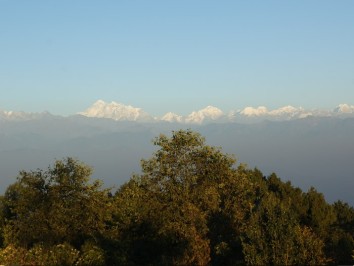
Flexibility. During the trek to Mera Peak the itinerary was tuned to match our level of acclimatisation and performance (e.g., an extra day in Khare but then missing out Mera Base Camp and ascending directly to Mera High Camp). When we returned to Lukla we were facing nearly a week in Kathmandu before our flight home (due to cancellations and changes to flight times by our long-haul flight provider, nothing to do with MMT&T). Lochan suggested an excursion to Namche Bazar which we readily took up. This added what was effectively a second mini trek into the schedule and provided a fascinating comparison with the Mera Peak experience. Highly recommended if you have time on your hands!
Perhaps, far more to the point, it was a very enjoyable trip that mixed a lot of hard work and hard breathing with laughter, amazing scenery and wonder at the incredible Nepalese environment, all made possible by Dolakh and the MMT&T team.
James Kean
14th Apr, 2022
© 2011 - 2026 All rights reserved. Mountain Mart Treks & Expedition. Developed By: Xenatech Nepal.